
In the world of modern dentistry, clinical excellence is the baseline. You pride yourself on the quality of your restorations, the precision of your oral surgery, and the empathy of your patient care. However, many clinic owners find that despite their clinical skill, the “business” side of the practice feels like a leaky bucket.
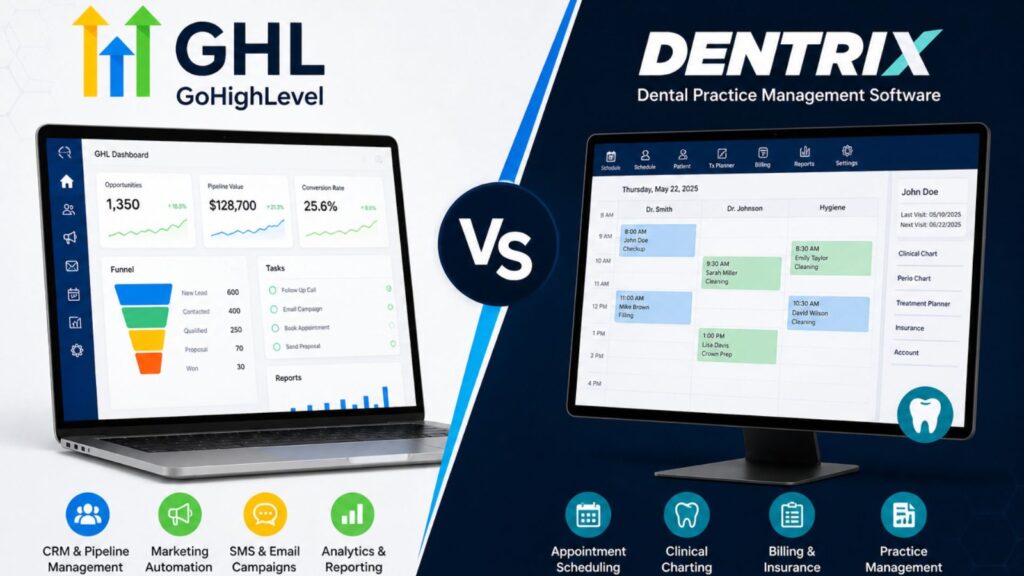
For decades, the industry standard has been legacy Practice Management Software (PMS). While these tools are robust for charting and billing, they often fall short in the one area that dictates modern growth: Proactive Patient Relationship Management. This is why an increasing number of practitioners are considering the transition or integration of switching from Dentrix to GHL (GoHighLevel).
This article explores the operational shift from a reactive, manual front-desk model to an automated, system-driven clinic.
The Operational Pain Points of Legacy Systems
If you are currently using a traditional PMS like Dentrix, you likely face three primary “silent killers” of revenue:
- Missed-Call Leakage: Patients call during lunch, after hours, or while the receptionist is on the other line. Without an immediate automated response, that patient calls the next clinic on Google.Switching from Dentrix to GHL
- The No-Show Tax: Manual confirmation calls are time-consuming and often forgotten. When a patient forgets an appointment, you lose the chair time and the overhead costs remain.
- Lead Ghosting: New patient inquiries from your website or social media sit in an inbox for 24 hours before a human follows up. By then, the “buying intent” has evaporated.
The reality is that legacy systems were built for records, not for conversion. Switching from Dentrix to GHL isn’t just about changing software; it’s about shifting from a storage mindset to a communication mindset.
What Intelligence Means in a Dental Clinic
Growth does not come from working more hours; it comes from increasing the “intelligence” of your workflows. In a dental setting, intelligence is defined by the ability of your system to make decisions without human intervention.Switching from Dentrix to GHL
Human Intelligence vs. System Intelligence
Human Intelligence is your front-desk coordinator’s ability to calm an anxious patient or navigate complex insurance claims. This is high-value work.
System Intelligence is the software’s ability to recognize that a patient canceled an appointment and immediately text the next three people on the “Short Call” list to fill the gap.
When you rely solely on human intelligence for repetitive tasks, you invite burnout and human error. When you implement system intelligence—specifically by switching from Dentrix to GHL for your marketing and communication layers—you free your staff to focus on the patients physically standing in front of them.
AI & Automation: The Core of Modern Practice
Artificial Intelligence in dentistry isn’t just about reading X-rays; it’s about managing the patient lifecycle. Platforms like GoHighLevel (GHL) serve as the “brain” that sits on top of your clinical data.
While Dentrix handles the clinical charts, GHL handles the human being. It automates the “nurture” process. It tracks exactly where every lead came from, how much they are worth, and ensures no one falls through the cracks.Switching from Dentrix to GHL
- Automated Missed Call Text-Back: If a call is missed, the system immediately texts the patient: “Hi, this is [Clinic Name]. We’re with a patient right now but wanted to reach out. How can we help?”
- Database Reactivation: Scanning your existing list for patients who haven’t had a cleaning in 6+ months and sending a personalized (but automated) SMS.
Think of it this way: if your clinic loses even 5 missed calls per week, that’s silent revenue walking away. A structured automation system prevents that by ensuring every interaction is captured and followed up on.
Note: The link below is an affiliate link. I only recommend systems that align with structured clinic growth.
[Start Building a Smarter Dental System](INSERT YOUR AFFILIATE LINK HERE)
Real Clinic Scenarios: The Cost of Manual Work
Let’s look at a common scenariSwitching from Dentrix to GHLo. A potential patient, “Sarah,” sees your ad for dental implants at 9:00 PM. She fills out a form.
- The Traditional Way (Dentrix only): The lead sits in an email inbox. The receptionist sees it at 9:00 AM the next day, but gets busy with check-ins. She calls Sarah at 2:00 PM. Sarah doesn’t answer. The lead goes cold.
- The Intelligent Way (After switching from Dentrix to GHL): Sarah fills out the form. Within 30 seconds, GHL sends her a text with a link to your booking calendar. Sarah books her consultation immediately. The receptionist arrives the next morning to a confirmed appointment on the schedule.
The difference isn’t the quality of the dentistry—it’s the speed of the system. By switching from Dentrix to GHL for your front-end operations, you eliminate the “lag” that kills conversions.Switching from Dentrix to GHL
Consider the economic impact of a single no-show. In a mid-sized clinic, a missed 60-minute appointment can represent a $200–$500 loss in production. If your system can reduce no-shows by just 15% through multi-channel (Email/SMS/Voice) reminders, the software pays for itself in a single week.
👉 [Start Building a Smarter Dental System](INSERT YOUR AFFILIATE LINK HERE)
Common Mistakes When Switching Systems
The most common mistake clinic owners make is trying to replace their clinical software entirely. You still need a clinical record. The goal of switching from Dentrix to GHL is often not to delete Dentrix, but to move all patient acquisition and communication tasks out of the old-school interface and into a modern CRM.
Other mistakes include:
- Over-complicating Automations: Start with missed calls and reminders. Don’t build a 50-step sequence on day one.Switching from Dentrix to GHL
- Ignoring Staff Training: Your team needs to understand that GHL is a tool to help them, not replace them.
- Inconsistent Data: Ensure you have a clear process for moving “Booked” leads from GHL into your clinical records.Switching from Dentrix to GHL
For those looking for a deep dive into the technical aspects of these integrations, Dental Systems Pro offers comprehensive resources on bridging the gap between clinical software and marketing automation.
The Future of Structured Clinics
The future of dentistry is “System-Centric.” As overhead costs rise and staffing becomes more challenging, the clinics that thrive will be those that require the least amount of manual labor to generate the highest amount of patient value.
Switching from Dentrix to GHL for your business operations allows you to scale without adding more front-desk staff. It provides visibility into your “Cost Per Lead” and “Patient Lifetime Value” that legacy software simply cannot offer.
Before you invest in another piece of clinical equipment, consider investing in your operational infrastructure. A $50,000 laser is useless if your front desk is missing the calls to book the patients who need it.
[Start Building a Smarter Dental System](INSERT YOUR AFFILIATE LINK HERE)
Part 2: Implementation Mastery — Beyond the Switch
In our previous discussion, we established why switching from Dentrix to GHL is a strategic necessity for the modern practice. However, the true transformation happens during the implementation phase. A software tool is only as effective as the systems it powers.
As a Senior Healthcare Operations Strategist, I’ve observed that the most successful clinics don’t just “install” software—they re-engineer their patient journey. This second part focuses on the practical application of automation to maximize production while minimizing administrative friction.
1. Capturing the “Invisible” Patient: Reactivation Cycles
The most expensive mistake a clinic can make is ignoring the patients they already have. Your database is a goldmine, but in a legacy environment, reaching out to inactive patients requires hours of manual phone calls—tasks that your front desk often avoids or forgets.
By switching from Dentrix to GHL, you move from manual outreach to “Smart Lists.” These lists automatically identify patients who haven’t visited in 6 to 12 months. Instead of a cold call, the system sends a personalized, low-pressure SMS: “Hi [Patient Name], it’s been a while since your last cleaning at [Clinic Name]. We have a few slots open this Thursday—would you like to grab one?”
This simple automation often fills a week’s worth of gaps in the schedule within hours, requiring zero effort from your staff.
2. Managing High-Value Treatment Pipelines
Complex procedures like dental implants, full-mouth rehabilitations, or clear aligners rarely close on the first visit. These patients require education and consistent follow-up.
When you prioritize switching from Dentrix to GHL for your sales pipeline, you gain a visual “drag-and-drop” board. You can see exactly how many implant consultations are pending and how much potential revenue is on the table. If a patient leaves the office without booking, GHL triggers a “Long-Term Nurture” sequence, sending them testimonials, FAQ videos, and financing options over the next few weeks. This keeps your practice top-of-mind until they are ready to say “yes.”
3. Ending “Phone Fatigue” and Front-Desk Burnout
The primary cause of turnover in dental front offices is “Phone Fatigue.” Between managing incoming calls, checking in patients, and verifying insurance, your team is stretched thin.
The intelligence gained by switching from Dentrix to GHL acts as a digital concierge. Automating the intake process allows patients to fill out their medical histories and consent forms on their own devices before they ever step into the waiting room. By the time they arrive, the data is already organized, allowing your staff to focus on the human interaction rather than data entry.
If your clinic’s growth is currently limited by how many calls one person can answer, you don’t have a staffing problem—you have a system problem.
Note: The link below is an affiliate link. I only recommend systems that align with structured clinic growth.
[Start Building a Smarter Dental System](INSERT YOUR AFFILIATE LINK HERE)
4. Operational Transparency: The Owner’s Dashboard
One of the greatest frustrations for clinic owners is the lack of clear data. Dentrix is excellent for clinical records, but it is notoriously difficult to extract marketing ROI or staff efficiency metrics from it.
After switching from Dentrix to GHL for your business operations, you gain a transparent dashboard. As an owner, you can log in and see:
- The Lead-to-Booking Ratio: Are your ads actually turning into appointments?
- Missed Call Recovery Rate: How many missed opportunities did the system save today?
- Review Velocity: How many 5-star reviews were generated this week?
You no longer have to “guess” if your clinic is healthy. You have the data to prove it.
5. The Hybrid Architecture (Bridging the Gap)
To be clear: you do not need to abandon the clinical strengths of your current PMS. The most efficient clinics use a hybrid approach. They keep Dentrix for HIPAA-compliant charting and billing, but they move all patient acquisition and engagement into GHL.
This bridge allows you to maintain clinical integrity while benefiting from world-class marketing automation. For more technical insights on how to align these platforms, Dental Systems Pro provides specialized blueprints for dental-specific CRM setups.
Your time as a clinician is high-value. Every minute you spend worrying about unconfirmed appointments or lost leads is a minute you aren’t producing. Investing in your operational infrastructure is the only way to scale without sacrificing your personal life.
[Start Building a Smarter Dental System](INSERT YOUR AFFILIATE LINK HERE)
Conclusion of Part 2
Modern dentistry is as much about the “Patient Experience” as it is about clinical outcomes. The clinics that thrive in the coming years will be those that minimize friction for the patient and the staff alike. Switching from Dentrix to GHL for your communication and marketing layers is the most effective way to build a resilient, predictable, and scalable practice.
Conclusion
Transitioning your mindset—and your software—is a significant move. However, the data is clear: clinics that automate their follow-ups, recover their missed calls, and track their leads outperform their “manual” competitors every time. Whether you are fully switching from Dentrix to GHL or creating a hybrid system, the goal remains the same: clinical excellence supported by operational intelligence.
FAQs
1. Does GHL replace my clinical charting?
No. GHL is a CRM (Customer Relationship Management) and automation platform. You will likely still use Dentrix or a similar tool for HIPAA-compliant clinical notes, X-rays, and insurance billing. GHL handles the “everything else”—marketing, leads, and communication.
2. Is switching from Dentrix to GHL difficult for the staff?
There is a learning curve, but most staff find GHL’s interface much more modern and intuitive than legacy dental software. The key is to implement it in phases.
3. How does GHL handle HIPAA compliance?
GoHighLevel offers a HIPAA-compliant package that includes a Business Associate Agreement (BAA), ensuring that patient communication and data storage meet federal regulations.
4. Can I migrate my patient list from Dentrix?
Yes. You can export your patient database from Dentrix as a CSV file and import it into GHL to begin your automated reactivation campaigns.
5. What is the biggest benefit of switching?
The biggest benefit is visibility. You can finally see exactly how many people called, how many were booked, and how much revenue is sitting in your “pending” pipeline.
6. Will this help with my Google reviews?
Absolutely. One of the strongest features of GHL is the automated review request. The system can text the patient a direct link to your Google Business Profile the moment they check out of their appointment.