
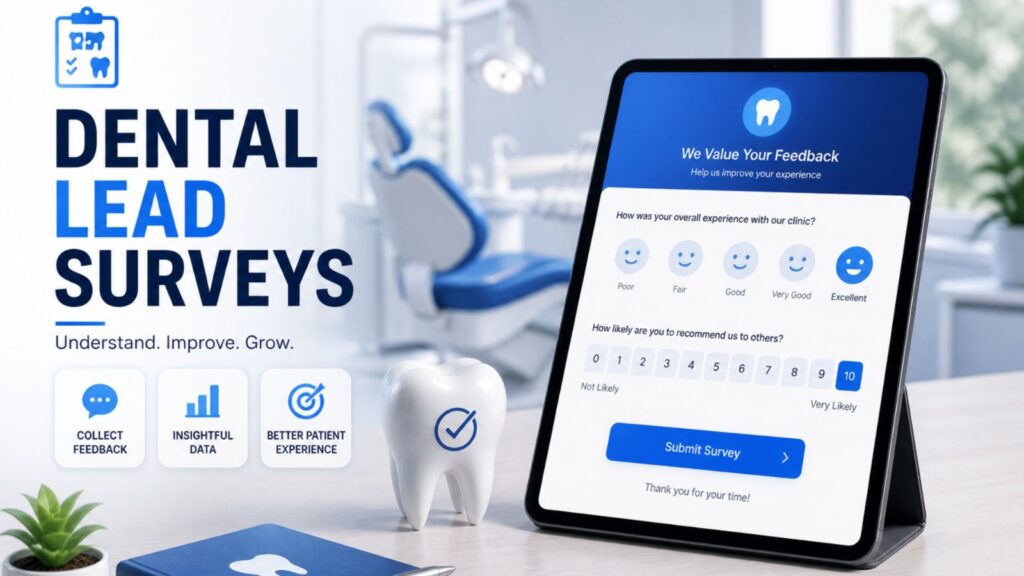
SEO Title: Using Surveys for Dental Leads: A Strategic Guide to Systems-Driven Clinic Growth Meta Description: Discover how to use surveys for dental leads to reduce no-shows and automate patient acquisition. A deep dive into dental clinic systems and CRM automation.
Beyond the Chair: Why Systems, Not Just Dentistry, Drive Clinic Growth
The modern dental practice is often a paradox of clinical excellence and operational chaos. You may be the most skilled clinician in your region, but if your front desk is drowning in manual tasks and your patient acquisition relies on “hope-based marketing,” your growth will always hit a ceiling.
As a clinic owner, you’ve likely realized that the bottleneck isn’t your handpiece—it’s your pipeline. When we look at the high-performing clinics of 2026, the differentiator isn’t just the quality of their veneers or implants; it’s the intelligence of their systems. Specifically, how they capture, qualify, and nurture interest through structured tools like surveys for dental leads.
In this guide, we will move past the “more ads” mentality and focus on how infrastructure—built on CRM logic and automation—stabilizes revenue and ends the cycle of burnout.Surveys for Dental Leads
1. The Operational Pain Points of the Modern Clinic
Most dental practices operate in a state of “leaky bucket” syndrome. You spend thousands on local awareness or digital ads, only to lose potential patients at three critical stages:
- The First Contact: A potential patient calls while the receptionist is processing a payment. The call goes to voicemail. Statistically, 80% of those callers will not leave a message; they will simply call the next dentist on Google.Surveys for Dental Leads
- The Qualification Gap: Not every lead is a “good” lead. Your team spends hours chasing people who aren’t ready for treatment or don’t fit your clinical profile. This is where surveys for dental leads become an essential filtering mechanism.
- The No-Show Epidemic: Without a multi-channel reminder system (SMS, Email, Voice), the “human error” of forgetting an appointment becomes a massive financial liability.
If you feel like you are working harder but the profit margins are staying flat, you don’t have a dental problem; you have a systems problem.
2. What “Intelligence” Means in a Dental Context
In a clinic setting, intelligence isn’t about how “smart” your software is; it’s about how much cognitive load it removes from your staff.
An intelligent system is predictable. It ensures that if a patient interacts with your website at 11:00 PM on a Sunday, they aren’t met with silence. Instead, they are met with a sequence that captures their intent, qualifies their needs via a survey, and places them directly into your workflow for Monday morning.
3. Human Intelligence vs. System Intelligence
We often over-rely on “star employees.” While a great office manager is worth their weight in gold, relying on a human to remember to follow up with 50 cold leads is a recipe for failure.
- Human Intelligence should be reserved for high-value tasks: patient empathy, complex treatment planning, and closing $20k cases.
- System Intelligence handles the mundane: sending the intake forms, following up on missed calls, and initial lead qualifying.
By shifting the “memory” of the business to a CRM, you protect your staff from burnout and ensure that no patient falls through the cracks.
4. Using Surveys for Dental Leads to Qualify Intent
The traditional “Contact Us” form is dead. It provides zero context. Instead, high-growth clinics are using structured surveys for dental leads to gather clinical and financial data before the first phone call even happens.
Imagine a lead interested in dental implants. Instead of just a name and number, a survey asks:
- “How many teeth are you looking to replace?”
- “Are you currently wearing dentures?”
- “Is this something you want to address in the next 30 days?”
By the time your coordinator calls that lead, they aren’t “selling”; they are “consulting.” This reduces the length of the sales cycle and significantly increases the conversion rate. For a deeper look at how data collection impacts healthcare outcomes, you can examine current healthcare survey standards to see the importance of structured data.
5. AI & Automation: Integrating GoHighLevel into the Workflow
This is where the concept of “Infrastructure” becomes reality. Platforms like GoHighLevel allow clinics to centralize patient communication, reminders, and tracking inside one structured system. It acts as the “brain” behind your front desk.
When a lead enters through one of your surveys for dental leads, the system can:
- Automatically tag them as “High Value – Implants.”
- Send an immediate “Thank You” SMS with a link to book a consultation.
- If they don’t book, it sends a follow-up video of the doctor explaining the procedure 24 hours later.
This level of persistence is impossible for a human to maintain manually, but for an automated system, it’s effortless.
Note: The link below is an affiliate link. I only recommend systems that align with structured clinic growth.
Transitioning from a manual “sticky-note” culture to a centralized CRM is the single most effective way to regain control of your time. If your clinic loses even five missed calls per week, that is silent revenue walking away. A structured automation system prevents that leak.
👉 [Start Building a Smarter Dental System](INSERT YOUR AFFILIATE LINK HERE)
6. Real-World Clinic Scenarios: From Chaos to Control
Scenario A: The Missed Call Recovery
A patient calls at 12:30 PM while the team is at lunch. In a traditional clinic, that’s a lost opportunity. In an automated clinic, the CRM detects the missed call and instantly sends a text: “Sorry we missed you! We’re at lunch but would love to help. What can we assist you with today?” The patient replies, a conversation starts, and the lead is saved.
Scenario B: The Survey-Driven Intake
A parent is looking for Invisalign for their teenager. They find your site and complete one of your surveys for dental leads. They indicate they have insurance and are looking to start “ASAP.” Because the system tagged them as “Ready to Buy,” your treatment coordinator gets a high-priority notification and calls them within 5 minutes. The parent is impressed by the speed and professionalism, and the appointment is booked before they can even find a competitor’s phone number.
7. Common Mistakes in Dental Lead Generation
- Buying “Cold” Leads: Buying a list of names is useless. You want “Inbound” leads—people who have actively engaged with your content or surveys.
- Slow Follow-up: The “Lead Decay” rate in dentistry is brutal. If you don’t respond within 5 to 10 minutes, the likelihood of booking drops by nearly 80%.
- Ignoring the “No-Show” Cost: A missed $500 hygiene appointment is a loss, but a missed $5,000 restorative appointment is a catastrophe. Without automated SMS/Email sequences, you are leaving your schedule to chance.
8. The Future of Structured Clinics
The future isn’t more dental chairs; it’s better data. As we move further into 2026, clinics that utilize surveys for dental leads to build a “Patient Database” will be the ones who survive economic shifts. When you own the data and have an automated way to communicate with it, you no longer rely on expensive Google or Facebook ads to fill your books. You simply “activate” your existing database with a few clicks.
Think of your CRM as a digital asset. A clinic with a clean, automated database of 5,000 qualified leads is worth significantly more during an exit or appraisal than a clinic that only has a paper filing cabinet.
Implementing a system like this isn’t an overnight task, but it is the final step in moving from a “job” to a “business.” By automating the repetitive and systemizing the lead flow, you create a clinic that runs profitably whether you are at the chair or on vacation.
👉 [Start Building a Smarter Dental System](INSERT YOUR AFFILIATE LINK HERE)
9. Conclusion: The Systems-First Mindset
Growth is not an accident. It is the result of intentional infrastructure. By utilizing surveys for dental leads, missed call text-back, and automated follow-ups, you aren’t just “marketing”—you are building a machine that supports your clinical expertise.
Stop letting your front desk be the bottleneck. Give them the tools to succeed, and give yourself the peace of mind that comes with a predictable, full schedule.
10. FAQs (Frequently Asked Questions)
How do surveys for dental leads help reduce no-shows?
By asking qualifying questions upfront, you gauge the patient’s commitment. Furthermore, once a survey is completed, the system can automatically trigger a reminder sequence that keeps the appointment top-of-mind, significantly lowering the no-show rate.
Is GoHighLevel difficult to set up for a small dental practice?
While it is a powerful tool, it is designed to be modular. Most clinics start with simple “Missed Call Text-Back” and “Lead Surveys” before moving into more complex automation. It is an infrastructure that grows with you.
Won’t patients find automated texts impersonal?
Quite the opposite. Patients in 2026 value speed and convenience. A quick, helpful text message is often preferred over a phone call that goes to voicemail or a delayed email response.
Can I use surveys for dental leads for high-ticket items like All-on-4 implants?
Absolutely. In fact, high-ticket items benefit the most from surveys. They allow you to pre-qualify patients based on their dental history and budget, ensuring your treatment coordinator only spends time on the most viable cases.
How does this integrate with my existing Practice Management Software (PMS)?
Most modern CRMs can work alongside your PMS. While the PMS handles the clinical records and billing, the CRM handles the “Pre-Patient” journey and marketing automation.
What is the ROI of implementing an automated system?
The ROI is typically seen in three areas: reduced “lost” revenue from missed calls, decreased administrative hours spent on manual follow-ups, and an increase in high-ticket case acceptance through better lead qualification.