
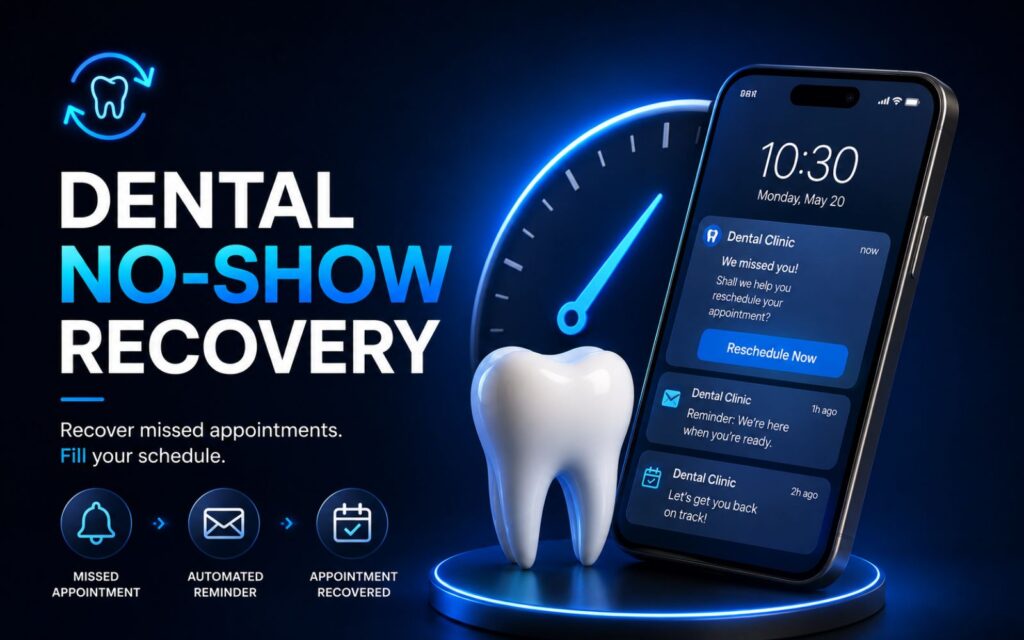
SEO Title: How to Handle Dental No-Shows: A Strategic Guide to Systems-Based Clinic Growth Meta Description: Stop losing revenue to empty chairs. Learn how to handle dental no-shows through operational intelligence, automated systems, and structured patient lifecycle management.
How to Handle Dental No-Shows: The Transition from Better Dentistry to Smarter Systems
For most dental clinic owners, the frustration of an empty chair at 10:00 AM is visceral. You have the overhead of a fully staffed office, the lights are on, the sterile instruments are laid out, and yet, the patient is nowhere to be found.
When clinic owners ask how to handle dental no-shows, they are often looking for a “magic script” for the front desk or a stricter cancellation policy. While those have their place, the reality of modern healthcare operations is different: high no-show rates are rarely a patient problem; they are a systems problem.
Growth in a dental practice does not come from simply being a better clinician. It comes from building an intelligent infrastructure that manages the human element of your business with the precision of a surgical procedure.
What Intelligence Means in a Dental Clinic
In a clinical setting, intelligence is defined by diagnostic accuracy and treatment success. In a business setting, intelligence is defined by predictability.
An “intelligent” clinic is one where the owner knows exactly how many leads are in the pipeline, why a patient canceled, and what automated mechanism is currently working to fill that gap. Handling no-shows isn’t about being “tough” on patients; it’s about reducing the friction between a patient’s intention to show up and their actual arrival.
To solve the no-show epidemic, we must look at two distinct types of intelligence: Human and Systemic.
Human Intelligence: The Limits of the Front Desk
Your front-desk team is the heartbeat of your practice, but they are often the most over-leveraged asset you have. In a typical day, a receptionist is expected to:
- Greet in-person patients.
- Answer inbound insurance queries.
- Manage clinician schedules.
- Chase down unconfirmed appointments.
When a clinic relies solely on human intelligence to handle no-shows, “leakage” is inevitable. A missed call at 2:00 PM during a busy check-out rush is a lost opportunity. A manual confirmation text that wasn’t sent because the phone was ringing is a potential no-show.
Human intelligence should be reserved for high-value empathy—calming a nervous patient or explaining a complex treatment plan. It should not be wasted on the repetitive, cognitive tax of manual follow-ups.
System Intelligence: The Architecture of Reliability
System intelligence is the digital “safety net” that catches what humans miss. If you want to know how to handle dental no-shows effectively, you must move toward a model where the system handles the “if-this-then-that” scenarios.
A system-driven clinic uses a Centralized CRM (Customer Relationship Management) to ensure that every patient touchpoint is tracked. Instead of a paper schedule or a basic digital calendar, the system acts as an active participant in the clinic’s operations.
AI & Automation: Implementing GoHighLevel in the Dental Workflow
This is where the transition from “busy” to “automated” happens. Modern platforms, specifically GoHighLevel, have changed the landscape for small-to-mid-sized clinics. By centralizing communication, these tools allow a clinic to act with the efficiency of a much larger corporation without the bloated overhead.
Missed Call Text-Back
The first step in handling no-shows is often capturing the patient before they even book. If a prospective patient calls and your team is busy, an automated “Missed Call Text-Back” system immediately engages them. This prevents “leakage” and starts the professional relationship on a high-tech, high-touch note.
Two-Way SMS Confirmations
Relying on a patient to answer a phone call for a confirmation is an outdated strategy. Intelligent systems use automated SMS sequences that require a simple “C” to confirm. This data then syncs directly back to your dashboard, flagging unconfirmed slots 48 hours in advance so your team can focus their manual efforts only on the outliers.
Nurture Sequences
Often, a no-show happens because the patient doesn’t value the appointment. Automation allows you to send “Value-Add” content (e.g., “What to expect during your hygiene visit”) leading up to the date. This builds authority and reduces the psychological likelihood of a no-show.
Note: The link below is an affiliate link. I only recommend systems that align with structured clinic growth.
Think of it this way: if your clinic loses even five appointments per month to simple forgetfulness, that is thousands of dollars in silent revenue walking away. A structured automation system prevents that by maintaining a constant, professional presence in the patient’s pocket.
[Start Building a Smarter Dental System](INSERT YOUR AFFILIATE LINK HERE)
Real Clinic Scenarios: Systems vs. Chaos
Let’s look at two ways to handle a typical Tuesday morning cancellation.
Scenario A: The Traditional Clinic A patient calls at 8:00 AM to cancel a 10:00 AM crown prep. The receptionist says “Okay,” hangs up, and then tries to remember who was on the “ASAP” list scribbled on a sticky note. Between checking patients in and out, she forgets to call the list. The chair stays empty. Loss: $800–$1,200.
Scenario B: The Systematized Clinic The same patient cancels. The receptionist marks the status in the CRM. Immediately, an automated “Short Notice Opening” text is sent to a pre-tagged segment of patients who are overdue for treatment. A patient nearby sees the text, clicks a link to claim the spot, and the chair is filled by 9:00 AM.
This isn’t magic; it’s infrastructure. By using a platform like GoHighLevel, the clinic owner has visibility into these “micro-recoveries” that happen without their direct intervention.
Common Mistakes When Handling No-Shows
Most clinic owners make three fundamental errors when trying to solve this problem:
- Leading with Penalties: A $50 no-show fee might make you feel better, but it doesn’t fill the chair and often alienates patients. Systems should focus on prevention rather than punishment.
- Over-complicating the Tech Stack: Using five different tools for texting, emailing, and scheduling leads to data silos. A centralized CRM ensures that the left hand knows what the right hand is doing.
- Ignoring the “Ghost” Leads: These are the people who call, ask for a price, and never book. Without automated lead tracking, these potential patients are forgotten. Recovering just 10% of these “ghosts” through automated follow-up can neutralize the cost of your no-shows entirely.
Implementing these tools requires a shift in mindset. You are no longer just a dentist; you are the CEO of a healthcare delivery system. When you provide your team with the right tools, you reduce their burnout and increase your revenue stabilization.
If you are tired of the “feast and famine” cycle of a chaotic schedule, it is time to look at the underlying architecture of your practice. Moving your operations into a unified platform allows you to track every lead and automate every mundane task.
[Start Building a Smarter Dental System](INSERT YOUR AFFILIATE LINK HERE)
The Future of Structured Clinics
As we move further into an era of “on-demand” services, patient expectations are changing. They want to book online at 11:00 PM, they want text reminders, and they want seamless communication.
Clinics that continue to rely on manual phone calls and paper-thin processes will find their acquisition costs rising and their retention rates falling. The future of dentistry belongs to the “Smarter Clinic”—one that leverages AI to handle the volume and humans to handle the value.
By integrating a tool like GoHighLevel, you aren’t just buying software; you are installing a nervous system for your business. It allows you to see the “health” of your practice in real-time, from missed call recovery rates to the lifetime value of a patient.
Conclusion: Turning Empty Chairs into Opportunities
Knowing how to handle dental no-shows is fundamentally about closing the gaps in your operations. It requires a move away from the “hope-based” scheduling of the past and toward the “systems-based” growth of the future.
When you automate the reminders, the lead captures, and the follow-ups, you don’t just save money—you buy back your time. You allow your staff to focus on the patients in front of them, and you allow yourself to focus on the dentistry you spent years perfecting.
Structured growth is a choice. It starts with the decision to stop accepting “leakage” as a cost of doing business and starting to build a system that works as hard as you do.
The most successful clinics aren’t necessarily the ones with the best marketing—they are the ones with the best systems to handle the results of that marketing.
[Start Building a Smarter Dental System](INSERT YOUR AFFILIATE LINK HERE)
FAQs
1. How does automation specifically reduce no-shows?
Automation reduces no-shows by increasing the frequency and convenience of touchpoints. By using multi-channel reminders (SMS, Email, and even automated Voice Drops), you meet the patient where they are, making it significantly harder for them to “forget” the appointment.
2. Isn’t a CRM like GoHighLevel too complex for a small dental office?
While it is a powerful tool, it can be scaled to fit your needs. For a small clinic, starting with simple “Missed Call Text-Back” and “SMS Confirmations” provides immediate ROI. You can add more complex lead-tracking features as you grow.
3. Will patients find automated texts impersonal?
On the contrary, patients often prefer the convenience of text. In a world where people rarely answer calls from unknown numbers, a professional, timely text message is viewed as a helpful service rather than an intrusion.
4. What is the biggest “revenue leak” in most dental clinics?
The biggest leak is the “Unconverted Lead.” These are people who call with an inquiry but don’t book immediately. Without a CRM to track these leads and send automated follow-up “nurture” messages, most clinics lose these patients forever.
5. Can I integrate my existing practice management software with GoHighLevel?
Yes. Most modern CRMs can be integrated with existing dental software through various triggers or third-party connectors (like Zapier). This allows your schedule to “talk” to your marketing and automation system.
6. How long does it take to see results from implementing an automated system?
Immediate benefits like “Missed Call Text-Back” can show results in the first week. More significant metrics, like a reduction in the overall no-show percentage, typically stabilize within 60 to 90 days as the system cleans up the patient communication pipeline.