
SEO Title: Automating Post-Op Instructions: The Strategic Guide to Reducing Clinic Overhead and Improving Patient Outcomes Meta Description: Learn how automating post-op instructions reduces dental front-desk burnout, minimizes emergency callbacks, and improves patient recovery through structured CRM systems.
The Systemized Clinic: Why Growth Depends on Infrastructure, Not Just Dentistry
In the dental industry, we are taught that clinical excellence is the primary driver of a successful practice. While a perfect crown margin or a seamless implant placement is vital for patient health, it is rarely the factor that determines whether a clinic scales or stagnates.
The reality of modern practice management is that many high-skill clinicians are trapped in low-efficiency businesses. They face a relentless cycle of missed-call leakage, high no-show rates, and a front-desk staff that is perpetually overwhelmed by manual tasks. When the “human element” is the only thing holding a practice together, the business is fragile.
To move from a high-stress practice to a high-performance one, owners must shift their focus from clinical output to intelligent systems. This means moving away from manual “memory-based” operations and toward a structured infrastructure where patient communication and follow-up happen by design, not by chance.
What Intelligence Means in a Dental Clinic
In a dental context, “intelligence” does not necessarily mean high-level clinical diagnostics. Rather, it refers to Operational Intelligence: the ability of the clinic to function predictably without constant intervention from the owner.
A truly intelligent clinic understands its numbers. It knows:
- The exact cost of a missed phone call (often valued at $250 – $500 in lifetime patient value).
- The percentage of patients who fail to book their six-month hygiene appointment.
- The administrative burden of manual post-operative follow-ups.
When a clinic lacks these systems, it relies entirely on the memory and mood of the front-desk staff. If a receptionist is busy or tired, a lead isn’t called back, or a post-op instruction isn’t clarified. Systems remove this variability.
The Synergy of Human and System Intelligence
We often hear that automation replaces the human touch. In a dental setting, the opposite is true. Automation protects the human touch.
Human Intelligence
Your team’s intelligence should be reserved for high-value interactions: calming a nervous patient, explaining a complex treatment plan, or resolving a billing dispute. These require empathy and nuance—things a machine cannot replicate.
System Intelligence
System intelligence handles the repetitive, the mundane, and the critical-but-boring tasks. This includes appointment reminders, birthday greetings, and—most importantly—automating post-op instructions. By delegating these to a system, your staff is freed from the “phone tag” cycle, allowing them to focus on the patients physically present in the office.
AI & Automation: Implementing Structure with GoHighLevel
The transition from a manual clinic to an automated one requires a central “brain.” For many small-to-mid-sized practices, platforms like GoHighLevel have become the gold standard for this infrastructure. Unlike a traditional Practice Management Software (PMS) that focuses primarily on clinical records and billing, a CRM like GoHighLevel focuses on the Patient Lifecycle.
One of the most immediate points of friction in a dental office is the post-operative period. Patients are often groggy, overwhelmed, or in slight discomfort when leaving the chair. They rarely retain 100% of the verbal instructions provided. This leads to evening phone calls to the doctor or unnecessary emergency visits.
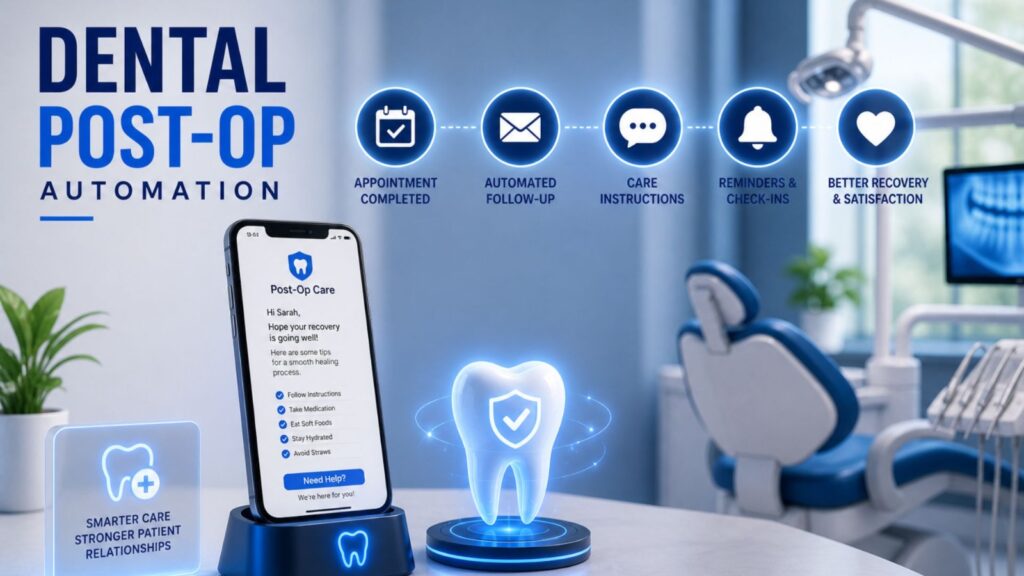
By automating post-op instructions via SMS and email, you ensure the patient has a permanent, searchable record of exactly what to do. You can trigger a sequence:
- 30 Minutes Post-Appt: A text message with a link to a “What to Expect” video.
- Evening of Appt: A check-in message asking about pain levels.
- 24 Hours Later: A reminder about salt-water rinses or medication schedules.
This isn’t just about convenience; it’s about risk management and patient perceived value.
Strategic Insight: If your clinic loses even 5% of its patient base to poor follow-up or perceived “lack of care,” you are losing tens of thousands in annual revenue. A structured automation system prevents that leakage by maintaining a consistent presence.
[Start Building a Smarter Dental System](INSERT YOUR AFFILIATE LINK HERE)
Note: The link above is an affiliate link. I only recommend systems that align with structured clinic growth.
Real-World Scenario: The “Friday Afternoon” Extraction
Consider a common scenario: A patient undergoes a complex surgical extraction on a Friday afternoon. The assistant provides gauze and verbal instructions. By Friday night, the patient is worried about the amount of bleeding. They can’t find the paper handout. They call the emergency line, or worse, they post a negative review about “lack of support.”
Now, imagine the automated alternative: Within an hour of the procedure being marked “complete” in the system, the patient receives a text: “Hi John, Dr. Smith here. We’ve sent a detailed guide on post-op care to your email. If you see spotting, that’s normal. Click here for a 30-second video on how to change your gauze.”
Automating post-op instructions transforms a high-anxiety moment into a managed, professional experience. This reduces “re-work” for your staff and builds immense trust with the patient. For more on clinical standards, organizations like the American Dental Association provide guidelines that these automated systems can help you communicate more effectively.
Common Operational Mistakes in Dental Clinics
Even well-intentioned owners make mistakes when trying to scale. The most common include:
1. The “More Leads” Trap
Many owners think they have a marketing problem when they actually have a leakage problem. They spend thousands on Facebook ads, but their front desk misses 30% of incoming calls. Without a “Missed Call Text-Back” system, you are essentially pouring water into a leaky bucket.
2. Information Overload at Checkout
Providing a patient with five different pieces of paper regarding their treatment plan, insurance, and post-op care is a recipe for non-compliance. Digital, automated delivery ensures the right information reaches the patient at the right time.
3. Lack of Lead Tracking
If a patient calls to ask about dental implants but doesn’t book immediately, do they vanish? In a systemized clinic, that lead is tagged and receives a monthly educational newsletter about the benefits of implants. This is how you stabilize revenue without constantly hunting for “new” blood.
The Future of Structured Clinics
The dental industry is moving toward a model where “Convenience is Currency.” Patients expect the same level of digital interaction from their dentist that they get from Amazon or Uber.
Clinics that adopt “System Intelligence” early will dominate their local markets. Not because their clinical skills are 10x better, but because their Patient Experience is 10x more consistent. Utilizing a platform like GoHighLevel allows you to build a “Digital Twin” of your practice—a system that works while you are sleeping, ensuring that no lead is ignored and no post-op patient feels abandoned.
Operational Reality: Scaling a clinic without automation is simply scaling burnout. By implementing structured follow-ups and missed-call recovery, you create a business that serves you, rather than a job that owns you.
[Start Building a Smarter Dental System](INSERT YOUR AFFILIATE LINK HERE)
Strategic Implementation: Moving Toward Automation
Transitioning to a systemized model doesn’t happen overnight. It starts with identifying the “High-Frequency, Low-Complexity” tasks.
- Step 1: Missed Call Recovery. Set up an automated text that goes out immediately if a call is missed: “Sorry we missed you! We’re with a patient—how can we help?” This saves dozens of new patients per month.
- Step 2: Automating Post-Op Instructions. Create a library of templates for your most common procedures (Fillings, SRP, Extractions, Implants).
- Step 3: Review Generation. Automate the request for a Google review 24 hours after a successful appointment.
By focusing on these three pillars, you create a foundation of revenue stability. You are no longer wondering if the front desk remembered to follow up; you know the system handled it.
Conclusion: The Path to a Sustainable Practice
True growth in dentistry is found in the margins of your operations. It is found in the 10 minutes saved per patient by automating post-op instructions, the 5 patients saved per week by missed-call automation, and the 15% increase in treatment acceptance through automated educational nurturing.
As a clinic owner, your time is your most valuable asset. Spending it on tasks that a CRM like GoHighLevel can do for pennies is an expensive mistake. Invest in your systems, and your dentistry will have the room to shine.
Decision Point: The difference between a chaotic office and a streamlined clinic is the willingness to implement a central operating system. It’s time to move beyond manual processes.
[Start Building a Smarter Dental System](INSERT YOUR AFFILIATE LINK HERE)
Frequently Asked Questions (FAQs)
1. Does automating post-op instructions feel impersonal to patients?
Actually, patients often find it more personal. A timely text message check-in feels like the doctor is thinking of them, whereas a paper handout feels like an afterthought. It provides a direct line of communication that patients highly value.
2. Is GoHighLevel difficult to integrate with my existing dental software?
While most dental PMS (like Dentrix or EagleSoft) are “closed” systems, GoHighLevel acts as a powerful communication layer that sits alongside them. You can easily trigger automations based on simple staff actions, bridging the gap between clinical data and patient engagement.
3. How does automation help with no-shows?
Automation allows for a multi-channel reminder strategy (Email, SMS, and even Ringless Voicemail). By requiring a “Confirm” reply that updates your system, you identify potential no-shows 48 hours in advance, giving your team time to fill the chair.
4. Can I automate instructions for complex procedures like All-on-4 implants?
Yes. In fact, complex procedures benefit the most from automating post-op instructions. You can drip-feed information over 14 days, reminding them when to switch to soft foods, when to begin gentle rinsing, and when to expect their follow-up appointment.
5. Will this increase the workload for my front desk?
Initially, there is a setup phase. However, once the systems are live, it significantly decreases the workload. Your staff will spend less time on the phone answering the same post-op questions and more time on high-level patient coordination.
6. Is this system HIPAA compliant?
When using platforms like GoHighLevel for dental practices, it is essential to use the HIPAA-compliant features (available on specific plans) and ensure you have a Business Associate Agreement (BAA) in place. This ensures all patient communication meets federal privacy standards.