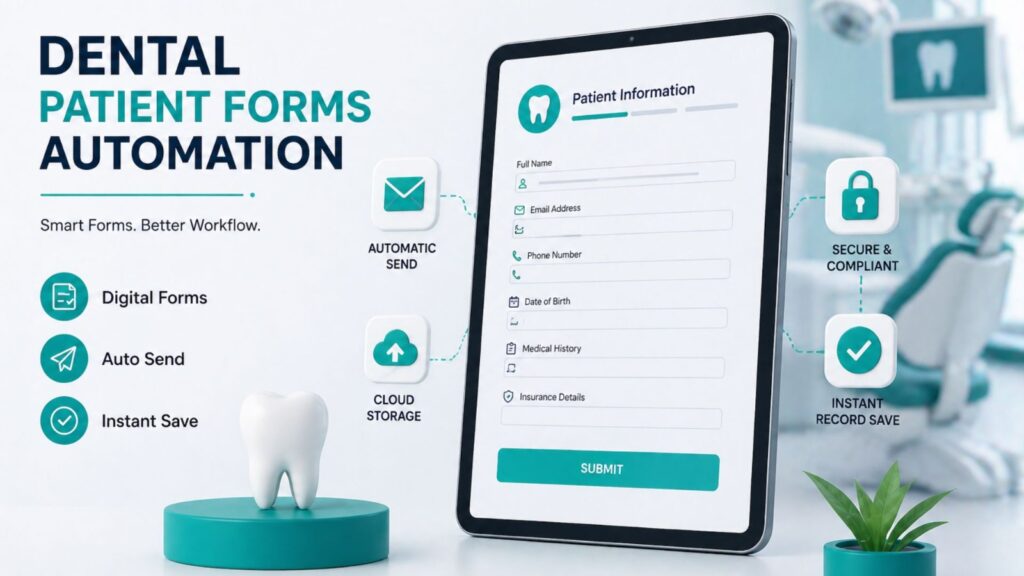
Are you tired of feeling like your dental practice is stuck on a hamster wheel? You know, that constant grind of bringing in new patients, only for manyAutomating Dental Patient to disappear after one visit or struggle with treatment acceptance? It’s a common frustration for clinic owners across the USA.automating dental patient data
The dental landscape is more competitive than ever. Relying on old strategies or generic marketing advice simply won’t cut it anymore. What worked five years ago might just be costing you money today.
This isn’t another article telling you to “have a good website” or “ask for reviews.” You already know that. Instead, we’re going to dive deep into practical, real-world strategies designed specifically for the US dental market. We’ll explore how to not just attract patients, but truly connect with them, build loyalty, and boost your clinic’s profitability.
Think of this as a no-nonsense guide from a consultant who understands your challenges. We’ll tackle patient acquisition, retention, operational efficiency, and even the tricky world of insurance, all with actionable steps you can implement right away. Let’s get started on transforming your practice.
Automating Dental Patient Forms: A Guide to Greater Clinic Efficiency
Many dental clinics pour money into Google Ads or local SEO, hoping for a magic flood of new patients. While these tools have their place, relying solely on them can be expensive and often brings in patients who are simply price-shopping or looking for a quick fix. To build a thriving practice, you need a more diverse and targeted approach.
Building Hyper-Local Authority, Automating Dental Patient Not Just Visibility
Instead of just showing up in searches, aim to be known as the go-to expert in your immediate community. This isn’t about sponsoring every local little league team (though that can help). It’s about strategic engagement that positions you as a trusted health resource.
Host Free Educational Workshops: Identify common dental concerns in your area. For example, host a “Healthy Smiles for Seniors” event at a local community center, discussing dry mouth, gum disease, and denture care. Or offer a “Kids’ Dental Health Playdate” at your clinic for parents, providing tips on preventing cavities.
Partner with Complementary Health Providers: Think beyond other dentists. Build relationships with local pediatricians, chiropractors, physical therapists, or even sleep clinics. Offer to give a short, informative talk to their staff about how dental health impacts overall wellness. In return, they might refer patients who express related concerns.
Become a Local Media Resource: Reach out to your local newspaper or community blog. Offer to write a monthly column on common dental myths, new technologies, or seasonal oral health tips (e.g., “Protecting Your Teeth During Sports Season”). This positions you as an expert, not just an advertiser.
Example: Dr. Emily in suburban Georgia partnered with a local elementary school. Instead of just donating toothbrushes, she offered a free “Dental Story Time” once a month, reading books about healthy teeth and doing a fun, interactive demo. Parents saw her genuine engagement, and the school recognized her as a community asset, leading to direct referrals and word-of-mouth.
Crafting a Referral System That Works for YouAutomating Dental Patient
Patient referrals are gold, but most clinics just hope they happen. You need a system that encourages them consistently. This means going beyond a simple “refer a friend” discount.
Implement a Tiered Patient Referral Program: Instead of a flat $50 off, create tiers. For the first referral, offer a small gift card. For the third, a more substantial service like a free custom whitening tray. For the fifth, perhaps a donation in their name to a charity you both support. This encourages repeat referrals and builds deeper loyalty.
Educate Your Patients on Why to Refer: Don’t just ask them to refer; explain the value. “We believe everyone deserves the same high-quality, comfortable care you receive here. Who in your life could benefit from our gentle approach?” Frame it as sharing a positive experience.
Create a Doctor-to-Doctor Referral Protocol: For specialists (orthodontists, periodontists, oral surgeons), actively cultivate relationships with general dentists. Host a small, exclusive lunch-and-learn event, demonstrating your commitment to collaborative care. Provide clear referral forms and promise timely communication back to the referring doctor.
“secure healthcare data encryption protocols”
Actionable Step: Design a simple “Referral Card” with a unique code for tracking. Hand these out at the end of every positive appointment. Train your front desk to say, “We loved having you today! If you know anyone who could benefit from our care, please share this card with them. It helps us track who sent them our way, and we’d love to thank you properly.”
Precision Marketing for High-Value Services
Trying to be everything to everyone is a recipe for mediocrity. Instead, focus on specific, high-value services that align with your expertise and clinic goals. Then, market those services to the right audience.
Targeted Direct Mail for Specific Demographics: For example, if you specialize in dental implants, don’t send a generic postcard to everyone. Work with a data provider to identify homeowners in your area aged 55-75 with a certain income level. Craft a mailer specifically addressing the pain points of missing teeth and the benefits of implants, perhaps including an invitation to a free seminar.
Niche Online Content and Ad Campaigns: If you offer sleep apnea treatment, create website content and run Facebook ads specifically targeting people who search for “snoring solutions,” “sleep apnea symptoms,” or “CPAP alternatives” in your area. Use visuals and language that resonate with their specific problem.
Webinars for Complex Procedures: For services like full mouth reconstruction or advanced cosmetic dentistry, host a free online webinar. This allows potential patients to learn from you in a low-pressure environment, ask questions, and build trust before stepping foot in your clinic. Promote the webinar through targeted social media ads.
Example: A clinic in Seattle wanted to grow its cosmetic dentistry. They stopped running general ads and instead focused on Instagram and Facebook ads showing before-and-after smile transformations. They targeted users interested in “wedding planning,” “beauty treatments,” and “self-improvement” within a 10-mile radius, offering a free “Smile Consultation” instead of a generic check-up. This specific approach attracted ideal patients.
Cultivating Loyalty: Beyond the Recall Card
Getting a new patient through the door is only half the battle. Keeping them, ensuring they complete their treatment plans, and turning them into raving fans is where true practice growth happens. Many clinics rely on automated recall systems, which are necessary but not enough to build deep loyalty.
Mapping the Patient Journey for Friction Points
Think about every single interaction a patient has with your clinic, from their first search to their post-treatment follow-up. Where do things go wrong? Where can you make it smoother, more personal, and more memorable?
The Initial Inquiry: Is your phone answered promptly and warmly? Does your online chat bot provide helpful, human-like responses? A frustrated first contact often means no appointment.
The First Visit Experience: Beyond clinical care, think about comfort. Is your waiting room inviting? Are forms easy to fill out (digital options are key)? Does the front desk staff make eye contact and use the patient’s name?
Treatment Plan Presentation: Is it clear, concise, and easy to understand? Are financing options discussed proactively and empathetically? Patients often decline treatment because they don’t understand the “why” or the “how.”
Post-Treatment Follow-up: A simple, personalized call or text a day after a major procedure can make a huge difference. It shows you care, not just about the procedure, but about them.
Recall and Reactivation: Beyond automated texts, how do you re-engage patients who’ve missed appointments or haven’t been in for a while? A personalized email from the doctor (not just the office) can be incredibly effective.
Example: Dr. Chen’s clinic in Texas realized many patients were dropping off after their initial exam because the treatment plan felt overwhelming. They redesigned their presentation. Now, the hygienist and doctor present the plan using visual aids (intraoral camera photos, digital X-rays) and explain each step in simple terms. Then, a dedicated treatment coordinator sits down with the patient to discuss financing, insurance benefits, and scheduling options, breaking the plan into manageable phases. This personal touch significantly increased case acceptance.
Creating a “Wow” Experience at Every Touchpoint
It’s the little things that often leave the biggest impression. These aren’t expensive gestures, but thoughtful ones that show you value your patients.
Personalized Welcome Kits for New Patients: Beyond a generic brochure, include a handwritten note from the doctor, a small, high-quality gift (like a premium lip balm or floss), and a clear “what to expect” guide for their first visit.
Comfort Amenities That Matter: Offer noise-canceling headphones, warm blankets, or a choice of music during procedures. Provide bottled water or a coffee station in the waiting room. These small comforts reduce anxiety.
Celebrate Patient Milestones: Send a personalized birthday email or card. If a patient has been with you for 10 years, acknowledge it with a small token of appreciation. These gestures build emotional connections.
Leverage Technology for Enhanced Service: Use a patient portal for easy access to records and appointment scheduling. Implement two-way texting for quick questions and appointment confirmations. Consider a virtual consultation option for initial inquiries or follow-ups.
Actionable Step: After a patient has a particularly positive experience (e.g., complimenting a staff member, expressing relief after a procedure), empower your front desk to immediately hand them a pre-printed card with a QR code or simple URL to leave a review. Make it frictionless.
Membership Plans: An Alternative to Insurance Headaches
Many patients in the US are uninsured or underinsured, making dental care seem unaffordable. A well-structured in-house membership plan can be a game-changer for retention and predictable revenue.
Design Value-Driven Plans: Offer different tiers (e.g., individual, family, periodontal care) that include preventive services (cleanings, exams, X-rays) and a discount on other treatments. Make the annual fee competitive with what patients might pay for a low-end insurance plan.
Market the Benefits Clearly: Emphasize savings, no deductibles, no waiting periods, and no annual maximums. Frame it as “affordable access to quality care” rather than “not insurance.”
Simplify Enrollment and Management: Use a reputable third-party platform or design a straightforward in-house system for sign-ups and recurring payments. Make it easy for your front desk to explain and enroll patients.
Example: Dr. Lee in Florida launched a membership plan specifically targeting the large retiree population in his area who often had limited dental insurance. His “Senior Smile Plan” included two cleanings, two exams, annual X-rays, and a 20% discount on all other services for an annual fee. He promoted it through local senior centers and community newsletters. This not only brought in new patients but also ensured consistent preventive care for his existing uninsured patients.
Streamlining for Success: Optimizing Clinic Operations & Profitability
A busy clinic doesn’t always equal a profitable one. Inefficiencies, poor case acceptance, and insurance claim issues can drain your resources and staff morale. Optimizing your operations is key to sustainable growth.
Mastering the Art of Case Acceptance
Patients often decline treatment not because they don’t trust you, but because they don’t fully understand the need, the process, or the financial implications. Improving case acceptance is about education, empathy, and clear communication.
Educate, Don’t Just Diagnose: Use visual aids like intraoral cameras, digital X-rays, and 3D models to show patients exactly what’s happening in their mouth. Explain the consequences of inaction in simple, relatable terms. “If we don’t address this crack, it could lead to a painful infection…”
Present Treatment Options, Not Demands: For many procedures, there are different approaches. Presenting options (e.g., “We could do a filling, but a crown would be more protective in the long term, and here’s why…”) empowers patients to make informed decisions.
Integrate Financial Discussions Early and Clearly: Don’t wait until the patient is ready to schedule to spring the cost on them. The treatment coordinator should discuss fees, insurance estimates, and financing options (e.g., CareCredit, in-house payment plans) before the patient leaves the consultation room.
Role-Play Treatment Presentations with Your Team: Regularly practice how you explain common procedures and address patient objections. This builds confidence and consistency across your team.
Example: A clinic in Arizona struggled with patients declining necessary root canals. They implemented a new protocol: after the dentist presented the clinical need, the treatment coordinator would show a short, animated video explaining the root canal procedure in simple terms. Then, they’d present a printed treatment plan with estimated insurance coverage and three financing options. This multi-pronged approach, focusing on education and financial clarity, doubled their root canal acceptance rate.
Navigating the Insurance Maze: From Burden to Benefit
Insurance is a major source of frustration for many US dental clinics. Low reimbursement rates, complex coding, and constant denials can feel like a losing battle. But with a strategic approach, you can turn it into an advantage.
Strategic Participation: Choose Your Battles: You don’t have to be in-network with every single insurance plan. Analyze your data: which plans bring in profitable patients? Which ones have low reimbursement and high administrative burden? Consider dropping unprofitable plans or negotiating better rates.
Become an Insurance Expert (or Hire One): Train your front desk or hire a dedicated insurance coordinator who understands coding, appeals processes, and patient benefit verification inside and out. This reduces denials and maximizes collections.
Pre-Authorization and Patient Education: For major procedures, always get pre-authorizations. More importantly, educate your patients on their specific benefits before treatment begins. Provide them with a clear estimate of their out-of-pocket costs. This prevents surprises and builds trust.
Leverage Technology for Claims Management: Use your practice management software’s full capabilities for electronic claims submission, tracking, and reporting. Look into third-party services that specialize in dental claims processing for added efficiency.
Actionable Step: Conduct a quarterly audit of your top 5-10 insurance plans. Track reimbursement rates, denial rates, and the administrative time spent on each. Use this data to inform your participation strategy and identify areas for improvement.
Empowering Your Team: The Engine of Your Practice
Your staff is your greatest asset. Investing in their training, well-being, and empowerment directly impacts patient satisfaction and clinic efficiency.
Beyond Basic Training: Develop Soft Skills: Train your team not just on clinical procedures or software, but on communication, empathy, conflict resolution, and patient psychology. How do they handle an anxious patient? How do they address a billing question with kindness?
Cross-Training for Efficiency: Cross-train your team members on various front and back-office tasks. This ensures smooth operations even when someone is sick or on vacation, reducing stress and improving patient flow.
Regular Team Meetings with a Purpose: Beyond scheduling, dedicate time to discuss clinic goals, patient feedback, and process improvements. Empower your team to identify problems and propose solutions.
Invest in Continuous Education: Support your team in attending workshops, webinars, or conferences. Keeping their skills sharp benefits everyone.
Example: Dr. Rodriguez’s clinic in Colorado introduced weekly “Huddle” meetings. Instead of just reviewing the day’s schedule, they’d discuss one patient success story, one operational challenge (e.g., “How can we reduce late arrivals?”), and one positive patient review. This fostered a sense of teamwork, problem-solving, and shared purpose, leading to a noticeable improvement in staff morale and efficiency.
Building an Unforgettable Brand & Reputation
In a crowded market, simply offering good dentistry isn’t enough. You need to stand out. Your brand isn’t just your logo; it’s the sum of every patient interaction, every online review, and every message you put out.
Defining Your Unique Value Proposition (UVP)
What makes your clinic truly different? Why should a patient choose you over the clinic down the street? If you can’t answer this clearly, neither can your patients.
Identify Your Niche or Speciality: Are you the “anxiety-free” clinic? The “tech-forward” practice with all the latest gadgets? The “family-focused” office that caters to all ages? The “cosmetic smile transformation” expert?
Translate Features into Benefits: Don’t just list your services. Explain how they benefit the patient. Instead of “we use digital X-rays,” say “our digital X-rays mean less radiation and faster, more accurate diagnoses for your peace of mind.”
Craft a Compelling Brand Story: Why did you become a dentist? What’s your clinic’s philosophy? Patients connect with stories and values, not just procedures. Share this story on your website, in your waiting room, and through your team.
Example: Dr. Patel’s clinic in New York City rebranded as “The Gentle Dental Studio.” Their UVP was centered around creating an anxiety-free experience. This wasn’t just a slogan; it was woven into everything: calming decor, noise-canceling headphones, sedation options, and staff trained in empathetic communication. Their marketing focused on visuals and testimonials from anxious patients who finally felt comfortable at a dentist.
Proactive Reputation Management: Owning Your Narrative
Online reviews are your new storefront. You need a systematic approach to not just respond to them, but to actively generate positive feedback and address negative comments gracefully.
Systematize Review Requests: Make asking for reviews a standard part of your patient journey. After a successful appointment or completed treatment, send an automated (but personalized) text or email with a direct link to Google, Yelp, or Healthgrades.
Train Your Team to Identify “Happy Moments”: Empower your staff to recognize when a patient expresses extreme satisfaction. That’s the perfect moment to say, “We’re so glad you had a great experience! Would you mind sharing that on Google for us?”
Respond to All Reviews, Positive and Negative: Thank positive reviewers for their kind words. For negative reviews, respond promptly, professionally, and empathetically. Acknowledge their concern, apologize for their experience, and offer to discuss it offline. Never get defensive.
Showcase Positive Reviews: Feature glowing testimonials on your website, social media, and even in your waiting room. This builds social proof and reinforces your brand’s positive image.
Actionable Step: Implement a review generation platform that integrates with your practice management software. This allows you to automatically send review requests after appointments and monitor all your online review sites from one dashboard.
Leveraging Storytelling and Patient Testimonials
Authentic patient stories are far more powerful than any advertisement. They build trust and show potential patients what they can expect.
Video Testimonials: Written reviews are great, but video testimonials are gold. Ask happy patients if they’d be willing to share their experience on camera. Keep it short, natural, and authentic. Focus on how their life improved after treatment.
Before-and-After Galleries (with Consent): For cosmetic or restorative procedures, a well-curated gallery of before-and-after photos (with explicit patient permission) can be incredibly persuasive.
Patient Journey Stories: Share the story of a patient who overcame a major dental fear or transformed their smile. Detail their initial problem, their experience at your clinic, and their amazing results. This resonates deeply.
Example: Dr. Kim’s clinic in California started producing short, high-quality video testimonials for patients who completed full mouth reconstructions. They’d capture the patient talking about their initial struggles and then their joy and confidence after the treatment. These videos, shared on their website and social media, were instrumental in attracting new, high-value cosmetic patients.
Navigating the USA Insurance Landscape with Finesse
Insurance is a critical aspect of dental care in the US, often dictating patient choices and clinic profitability. Instead of just accepting it as a necessary evil, you can develop strategies to manage it effectively and even turn it into a competitive advantage.
Strategic PPO Participation and Fee-for-Service Integration
Simply being in-network with every PPO plan might seem like a way to get more patients, but it can significantly reduce your profit margins. A thoughtful approach is crucial.
Analyze Your PPO Contracts Annually: Don’t just sign renewals without review. Understand your reimbursement rates for common procedures. Identify plans that consistently pay below your cost or require excessive administrative work.
Consider a Selective PPO Strategy: You might choose to participate only with plans that offer reasonable reimbursement rates and bring in a consistent volume of ideal patients. For others, you can be out-of-network.
Educate Patients on Out-of-Network Benefits: Many patients don’t realize their out-of-network benefits are often quite good. Train your front desk to explain how you can still submit claims on their behalf and how the difference in cost might be negligible for quality care.
Gradually Shift Towards Fee-for-Service: For specific high-value services (e.g., cosmetic procedures, implants), consider offering them on a fee-for-service basis. Market the value, expertise, and personalized experience rather than focusing on insurance coverage.
Example: Dr. Harrison in Texas found himself accepting over 20 PPO plans, with many offering extremely low reimbursement. He analyzed his patient base and identified the 5-7 plans that brought in the most profitable patients. He strategically dropped the others, using the time saved on administrative tasks to focus on marketing his in-house membership plan and high-end cosmetic services. While he saw a slight dip in new patient volume initially, his profitability and average patient value significantly increased.
In-House Insurance Advocacy: Empowering Your Patients
Patients often feel overwhelmed and confused by their dental insurance. Your clinic can become their trusted advocate, which builds immense loyalty.
Dedicated Insurance Liaison: Appoint and thoroughly train a staff member whose primary role is to be an expert on insurance. They should be able to explain benefits, pre-authorize treatments, and handle appeals.
Proactive Benefit Verification: Before a new patient’s first appointment, and before any major procedure for existing patients, verify their benefits in detail. Understand their deductibles, annual maximums, and frequency limitations.
Clear Financial Consultations: During treatment plan presentations, the insurance liaison should sit down with the patient to clearly explain what insurance is estimated to cover and what their out-of-pocket responsibility will be. Provide this in writing.
Assistance with Denials and Appeals: Don’t just tell a patient their claim was denied. Help them understand why and offer to assist with the appeals process. This level of service is rare and highly valued.
Actionable Step: Create a simple, one-page “Dental Insurance Explained” guide for your patients. Break down common terms like “deductible,” “co-pay,” “annual maximum,” and “UCR fees” in easy-to-understand language. Offer this online and in your waiting room.
Leveraging Membership Plans for Predictable Revenue
As discussed earlier, membership plans are a powerful tool for uninsured patients. They also offer a stable, predictable revenue stream not tied to insurance company whims.
Market Membership Plans as a “Savings Alternative”: Position your plan not as a replacement for insurance, but as a smart way to save money on quality dental care for those without traditional coverage.
Ensure Plans are Easy to Understand and Enroll In: Simplicity is key. A confusing plan or difficult sign-up process will deter patients.
Regularly Review and Update Plan Offerings: As your costs change or patient needs evolve, be prepared to adjust your membership plan benefits and pricing to remain competitive and profitable.
Example: Dr. Davies in a bustling urban center noticed a significant portion of his younger patient base had high-deductible insurance plans or no dental coverage at all. He launched a “Young Professionals Smile Plan” that included two cleanings, exams, and a 15% discount on restorative work for a low monthly fee. He promoted it through local co-working spaces and online. This captured a demographic often overlooked by traditional insurance-focused marketing.
Bringing It All Together: Your Path Forward
Running a successful dental clinic in the USA is more complex than ever. It requires a blend of clinical excellence, smart business strategies, and a deep understanding of your patients’ needs and the market dynamics. By moving beyond generic advice and implementing these practical, targeted strategies, you can transform your practice.
Focus on building genuine connections with your community, optimizing every step of the patient journey, empowering your team, and strategically managing your finances and insurance relationships. These aren’t quick fixes, but sustainable approaches that will lead to long-term growth and a more fulfilling practice for you and your team.
Want to fix your clinic’s lead flow? Contact us for a system audit.