
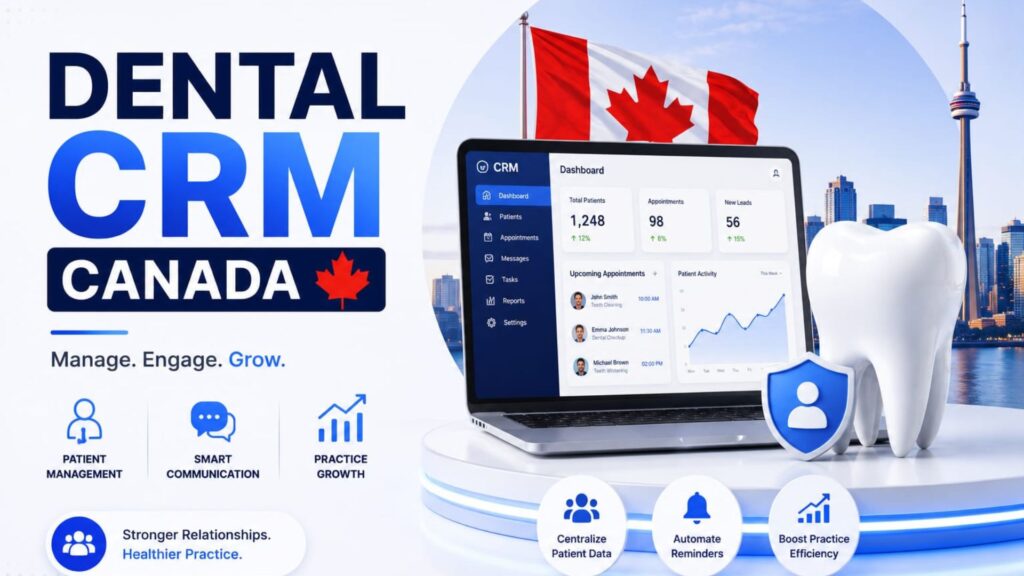
The single greatest threat to your expansion isn’t a competitor opening across the street; it is the “Hidden Leak.” When scaling multi-location clinics in Canada, most owners focus on acquisition—buying more chairs, hiring more associates, and increasing ad spend. However, without a centralized operational nervous system, you are simply pouring water into a leaky bucket.
Every missed phone call, every unoptimized schedule, and every delayed response to a patient inquiry represents a compounding loss in Patient Lifetime Value (LTV). In a multi-location environment, these micro-failures don’t just add up; they multiply. If your “scaling” strategy relies on finding five more “perfect” office managers, you aren’t building a business—you’re building a house of cards. True scale requires shifting from a talent-dependent model to a system-dependent model.
The Economics of Reputation: Why Scaling Multi-location Clinics in Canada Requires Digital Precision
In the Canadian dental landscape, the cost of acquisition (CPA) is rising. To maintain healthy margins while scaling multi-location clinics in Canada, you must master the “Economics of Reputation.”
The 1-Star Review vs. Patient LTV
A single 1-star review on Google doesn’t just “look bad.” It is a financial anchor. Research suggests that 80% of patients will bypass a clinic with a rating lower than 4 stars. If your average patient LTV is $5,000 (inclusive of hygiene, restorative, and referrals), and one negative review deters 20 potential patients over its lifetime, that single piece of feedback has a negative valuation of $100,000.
When you are scaling multi-location clinics in Canada, you cannot leave reputation to chance. You need an automated trigger that requests a review the moment a patient checks out, filtering for sentiment before it hits public forums. This is where GoHighLevel (GHL) becomes your defensive line.
The “Speed-to-Lead” Gap
The math of conversion is brutal. Data shows that responding to a lead after 15 minutes reduces the likelihood of booking by 80%. In a manual clinic, a lead comes in via a website form, sits in an email inbox, and waits for a busy receptionist to finish a phone call. By the time the receptionist calls back, the patient has already booked with the clinic down the street that had an instant SMS auto-responder.
Comparing the Operational Models
To visualize the difference between a traditional practice and a high-growth entity, consider the following structural comparison:
| Feature | The Chaotic Manual Clinic | The GHL-Automated Systematic Clinic |
| Lead Intake | Manual email checks / Post-it notes | Instant SMS/Email “Speed-to-Lead” triggers |
| Review Management | “Hope” and occasional verbal asks | Automated post-appointment sentiment audits |
| No-Show Recovery | Manual phone calls (if time permits) | Multi-channel automated re-activation loops |
| Multi-location Data | Disconnected spreadsheets | Unified Dashboard (The “Command Center”) |
| Staff Dependency | High (Clinic fails if the “Star” leaves) | Low (The System drives the behavior) |
| CPA Tracking | Estimated / Guesswork | Precise ROI tracking per ad campaign |
Strategic Pillars for Scaling Multi-location Clinics in Canada
1. Centralizing the “Nervous System” with GoHighLevel
When scaling multi-location clinics in Canada, the “Central Nervous System” must be software-driven. GoHighLevel serves as the bridge between your Practice Management Software (PMS) and your marketing.
By utilizing GHL’s Workflow Triggers, you can ensure that every clinic location follows the exact same follow-up protocol. Whether a patient visits your Toronto location or your Vancouver branch, the automated touchpoints—from appointment reminders to post-op instructions—remain identical. This removes the “human error” variable from your growth equation.
2. Smart Clinics vs. Famous Doctors
A “Famous Doctor” clinic is limited by the doctor’s hours. A “Smart Clinic” is a business asset that generates revenue regardless of who is holding the handpiece. To achieve the latter while scaling multi-location clinics in Canada, you must commoditize your excellence.
This means using GHL to map out the “Patient Journey” in its entirety.
- Awareness: Automated SEO and Review Management.
- Conversion: SMS Chat Widgets and 24/7 Booking Bots.
- Retention: Database Reactivation (sending bulk SMS offers to “dormant” patients).
3. Solving the Implementation Failure
The most common mistake owners make when scaling multi-location clinics in Canada is treating GHL like a “set and forget” tool. Buying the software without building the Workflow Triggers is like buying a Ferrari engine and putting it in a bicycle frame. You need a dedicated architect to map your internal SOPs into the software’s automation engine.
Case Study: From 3 Locations to 8 in 18 Months
The Challenge: A Southern Ontario dental group was struggling with a 25% “No-Show” rate and inconsistent review scores across locations. Their CPA was nearly $300 per new patient, and they couldn’t see a clear path to scaling multi-location clinics in Canada without their overhead exploding.
The Solution: We implemented a GHL-driven “Lead-to-Chair” pipeline.
- Instant Response: Any lead from Facebook or Google received an SMS within 45 seconds.
- The “Indoctrination” Sequence: A series of 3 emails/texts sent before the first visit to build trust.
- Automated Recalls: GHL identified patients who hadn’t been in for 6+ months and sent a “Spring Cleaning” promotion.
The Result:
- No-Show Rate: Dropped to 8%.
- CPA: Reduced to $110.
- Revenue: Increased by 42% without adding a single new administrative staff member.
Managing multiple locations requires a shift from working “in” the business to working “on” the system. If you want to stop trading time for money and start building a scalable enterprise, you need to automate your patient acquisition and retention.
👉 “Start Building a Smarter Dental System”
Technical Deep Dive: GHL Workflow Triggers for Multi-location Mastery
To effectively execute the strategy of scaling multi-location clinics in Canada, your GHL account must be structured using “Snapshots.” A Snapshot allows you to push an update (like a new holiday promotion or a revised follow-up sequence) to all 10 or 20 locations simultaneously.
The “React” Trigger
When a patient cancels last minute, the GHL trigger should immediately:
- Update the “Pipeline” status to “Cancelled.”
- Wait 5 minutes.
- Send an SMS: “Hi [Name], we missed you! Life happens. Here is a link to grab our next available opening tomorrow at 2 PM.”
- If no response, notify the front desk to call within 2 hours.
The “Review” Filter (Compliance Focused)
While staying HIPAA and PIPEDA compliant, you can use GHL to send a “Private Feedback” link first. If the patient selects 4 or 5 stars, they are redirected to Google. If they select 1-3 stars, they are sent to a private form that alerts the District Manager immediately. This allows you to resolve issues before they become public stains on your brand while scaling multi-location clinics in Canada.
Consistency is the precursor to scale. By removing the burden of manual follow-ups from your staff, you allow them to focus on what they do best: providing exceptional in-person patient care. This is how you win the market.
👉 “Start Building a Smarter Dental System”
Frequently Asked Questions
1. How does GHL handle Canadian anti-spam legislation (CASL) when scaling multi-location clinics in Canada?
Compliance is a cornerstone of professional scaling. When scaling multi-location clinics in Canada, your GHL setup must include explicit “opt-in” mechanisms. Every form must have a checkbox for SMS/Email consent, and every automated message must include a “Reply STOP to unsubscribe” footer. GHL automates the “Unsubscribe” list across all locations, ensuring that if a patient opts out of one clinic’s marketing, they aren’t accidentally contacted by another branch within your group, which protects you from significant CASL fines.
2. Can GHL integrate with traditional dental software like Dentrix or Tracker?
Yes, but it often requires a middleware solution like Bridge.insure or Zapier, depending on whether your PMS is cloud-based or server-based. When scaling multi-location clinics in Canada, the goal is to have “Read/Write” access. This means when a patient books in GHL, it appears in your PMS, and when they check out in the PMS, it triggers the GHL review sequence. A “Siloed” system is the enemy of scale; your data must flow freely between your clinical tools and your marketing tools.
3. What is the biggest bottleneck when adding a 4th or 5th location?
The bottleneck is almost always “Managerial Bandwidth.” Most owners try to manage by “walking the floor.” You can’t walk the floor of five clinics at once. When scaling multi-location clinics in Canada, you need a “Command Center” dashboard. GHL provides a unified view of every lead, every conversation, and every dollar of potential revenue in the pipeline across all locations. This allows you to manage by the numbers rather than by “gut feeling” or anecdotal reports from staff.
4. How do I maintain a high-quality “Culture” across multiple provinces?
Culture is often just a reflection of consistent standards. By using GHL to automate the patient communication, you ensure that the “Voice” of your brand remains the same whether the patient is in Alberta or Ontario. You are essentially “software-encoding” your culture. When scaling multi-location clinics in Canada, this consistency builds a predictable brand identity that makes your group more attractive to private equity buyers or future partners.
5. Why shouldn’t I just hire more front-desk staff instead of using automation?
Hiring is expensive and risky. In Canada, the cost of a full-time experienced receptionist (salary, benefits, taxes) can exceed $55,000/year. Furthermore, humans are prone to fatigue and distraction. A staff member might forget to follow up with a lead at 4:45 PM on a Friday. GHL never sleeps, never takes a sick day, and costs a fraction of a single employee’s salary while managing the workload of ten. Scaling multi-location clinics in Canada is about maximizing the “Revenue per Employee.”
6. Is it better to have one “Main” GHL account or separate ones for each city?
The “Agency” structure within GHL is the gold standard for scaling multi-location clinics in Canada. You should have one “Parent” account (The Group) and individual “Sub-accounts” for each location. This allows for localized phone numbers (important for trust and SEO) while maintaining the ability to push global updates from the parent level. It also allows you to compare the performance of Location A vs. Location B to identify which office needs more operational support.
Final Thoughts: The Future of Canadian Dental Groups
The window of opportunity for scaling multi-location clinics in Canada with high-margin returns is shifting toward those who embrace “Dental Intelligence.” The era of the “Famous Doctor” is being replaced by the era of the “Optimized System.” By implementing GoHighLevel as your central operational hub, you solve the reputation, speed-to-lead, and consistency issues that plague growing groups.
Note: The link below is an affiliate link. I only recommend systems that align with structured clinic growth.
Investing in your infrastructure today is the only way to ensure your EBITDA remains attractive for future exits or continued expansion. Don’t let your growth be limited by your manual capacity.