
SEO Title: Educational Drip Campaigns for Dental Clinics: The Blueprint for Patient Retention and Practice Growth Meta Description: Discover how educational drip campaigns and automated systems like GoHighLevel help dental clinic owners reduce no-shows, recover missed calls, and stabilize revenue without burnout.
The Invisible Leak: Why Better Dentistry Isn’t Fixing Your Clinic’s Growth
As a dental clinic owner, you’ve likely spent years perfecting your clinical skills. You’ve invested in the latest imaging technology, high-end chairs, and a talented team. Yet, despite being a top-tier clinician, you might still feel like your practice is running on a treadmill—working harder each month just to maintain a baseline.
The reality of modern dental operations is often sobering. You have high overhead, a front desk team that is perpetually overwhelmed, and a “leaky bucket” in your patient pipeline. Growth in a modern practice doesn’t come from a new whitening laser; it comes from educational drip campaigns and intelligent systems that manage the patient lifecycle when you aren’t looking.
What Intelligence Means in a Dental Clinic
In a clinical setting, intelligence is usually defined by diagnostic accuracy. In a business setting, intelligence is defined by predictability.
An “intelligent” clinic is one where the revenue is not solely dependent on the mood of the front desk or the volume of emergency walk-ins. It is a clinic where systems ensure that:
- Every missed call is acknowledged within seconds.
- Every patient who leaves without booking their next cleaning is entered into a sequence.
- Every lead from your website is nurtured through educational drip campaigns until they trust you enough to sit in the chair.
Systematizing these touchpoints moves your practice from a reactive state (waiting for the phone to ring) to a proactive state (nurturing a database of predictable revenue).
Human Intelligence vs. System Intelligence
Your staff is your greatest asset, but they are also human. They get busy, they get distracted, and they forget to follow up.
Human Intelligence belongs in the operatory and the consult room. It’s for empathy, complex treatment planning, and patient comfort.
System Intelligence, however, belongs in the administrative workflow. A system doesn’t get “too busy” to send a 6-month recall text. It doesn’t forget to send a post-op care video. When you rely on humans for repetitive data tasks, you create a bottleneck. When you delegate those tasks to a CRM (Customer Relationship Management) platform, you free your humans to do what they do best: provide care.
The Role of AI & Automation in Modern Dentistry
We are entering an era where automation is no longer a luxury for “Big Dental” groups; it is a necessity for the private practitioner. Automation tools, such as GoHighLevel, act as a 24/7 digital concierge for your clinic.
Instead of a siloed approach where your booking software, your email, and your text messages don’t talk to each other, a centralized system creates a “single source of truth.” When a prospective patient downloads a guide from your site about “Dental Implants vs. Bridges,” the system recognizes this as high-intent interest. It triggers educational drip campaigns that send specific, value-driven content to that lead over the next three weeks.
By the time that patient calls your office, they are already 80% sold on the treatment because the system educated them on your behalf.
Operational Insight: If your clinic loses even 5 missed calls per week, that’s silent revenue walking away. A structured automation system prevents that by providing immediate engagement and structured follow-ups.
[Start Building a Smarter Dental System]([INSERT YOUR AFFILIATE LINK HERE])
Note: The link above is an affiliate link. I only recommend systems that align with structured clinic growth.
Real Clinic Scenarios: From Chaos to Control
Let’s look at two common scenarios to see how systems change the outcome.
Scenario A: The No-Show Trap
A patient schedules a high-value crown prep but forgets the appointment. The front desk calls 15 minutes after the start time, leaves a voicemail, and the patient never calls back. That chair sits empty for two hours.
- The System Solution: 72 hours before the appointment, the CRM sends a confirmation text. 24 hours before, it sends an automated “What to expect” video. If they don’t confirm, the system alerts the front desk to call before the day of the appointment. If they do miss it, an automated “We missed you” sequence triggers immediately to reschedule, keeping the lead warm.
Scenario B: The “I’ll Think About It” Lead
A patient comes in for a consultation on Invisalign but leaves saying they need to “talk to their spouse.” They are never heard from again.
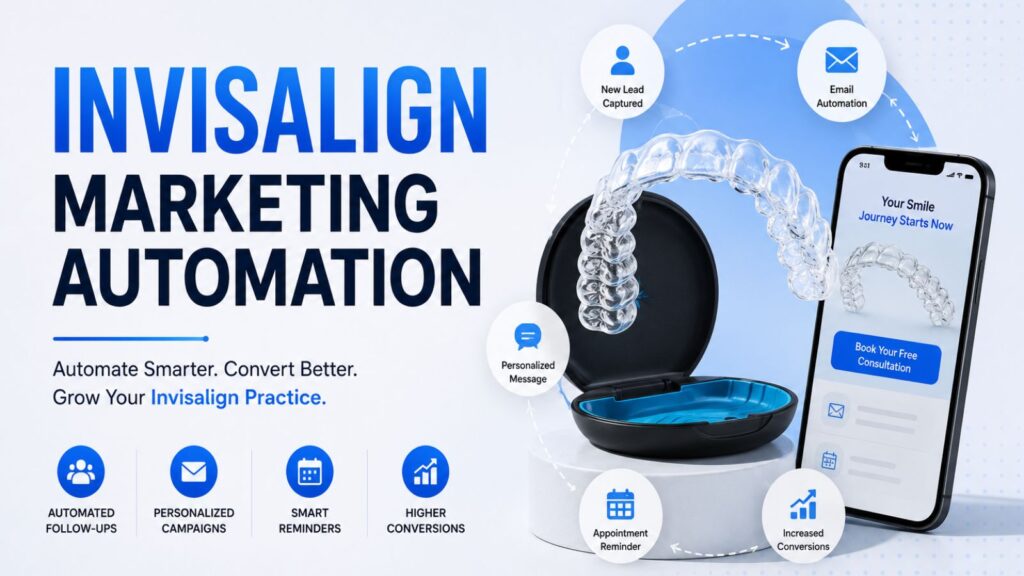
- The System Solution: The moment they leave, they are tagged in the CRM. The system starts educational drip campaigns featuring case studies, FAQs about financing, and testimonials from other patients. This keeps your clinic top-of-mind without your front desk having to “harass” them with manual sales calls.
Missed Call Recovery: The Easiest Revenue You Aren’t Making
One of the biggest leaks in dental revenue is the missed call. Whether it’s during lunch or after hours, a missed call is often a lost patient who simply calls the next dentist on Google.
With an automated system, a missed call triggers an immediate text back: “Hi, this is [Clinic Name]. Sorry we missed your call! How can we help you today?” This keeps the prospect engaged and stops them from calling your competitor.
Common Mistakes Clinic Owners Make with Technology
- Buying Features, Not Workflows: Many owners buy software because it has “AI” but never map out how it fits into their front-desk daily routine.
- Over-Automation: You don’t want to sound like a robot. The goal of educational drip campaigns is to sound like a helpful, caring extension of your office.
- Ignoring Data: If you don’t know your lead-to-patient conversion rate, you are flying blind. A proper CRM gives you a dashboard that shows exactly where people are dropping off.
Transitioning to a structured system isn’t just about “getting new leads”—it’s about ensuring the leads you already have don’t fall through the cracks of a busy office.
Strategic Advice: High-growth clinics prioritize infrastructure over vanity metrics. By centralizing your communication into a platform like GoHighLevel, you gain visibility into every patient interaction, ensuring no opportunity is ignored.
[Start Building a Smarter Dental System]([INSERT YOUR AFFILIATE LINK HERE])
The Future of Structured Clinics: Revenue Stabilization
The goal of every clinic owner should be revenue stabilization without burnout. This is achieved when your “New Patient” engine and your “Retention” engine are both automated.
Educational drip campaigns serve as the bridge between a stranger and a loyal patient. By consistently providing value—explaining the “why” behind hygiene, the “how” of gum disease, and the “what” of modern aesthetics—you build an authority that transcends price-shopping.
When your systems handle the reminders, the follow-ups, and the lead nurturing, your staff is less stressed. They can focus on the patient in front of them rather than the three people they forgot to call back.
Implementing the System: Your Next Steps
Moving toward a systematized practice requires a shift in mindset. You must stop viewing software as an “expense” and start viewing it as “digital staff.”
A platform like GoHighLevel can replace several smaller, disconnected tools (your email marketing, your text service, your landing page builder, and your lead tracker). Consolidating these allows for a seamless flow of data, which is the lifeblood of educational drip campaigns.
Before you invest in more marketing, ensure your “internal plumbing” is sealed. Ensure your missed calls are caught, your leads are nurtured, and your patients are educated.
Final Thought: True clinic freedom is knowing that even when you are on vacation, your systems are educating your patients, filling your calendar, and protecting your revenue. It’s time to move beyond manual management.
[Start Building a Smarter Dental System]([INSERT YOUR AFFILIATE LINK HERE])
Frequently Asked Questions (FAQs)
1. What are educational drip campaigns?
They are a series of automated emails or text messages sent to patients over a period of time. The goal is to provide value, answer common questions, and build trust without requiring manual effort from your staff.
2. Will automation make my clinic feel impersonal?
Actually, the opposite is usually true. When systems handle the repetitive reminders, your staff has more time to have genuine, unhurried conversations with patients in the office. You can also customize the messages to reflect your practice’s specific voice and tone.
3. How does GoHighLevel differ from standard dental software?
Most dental software (like Dentrix or Eaglesoft) focuses on clinical records and billing. GoHighLevel focuses on the “front end”—marketing, lead tracking, missed call recovery, and automated educational drip campaigns that those clinical systems often lack.
4. How long does it take to see results from these systems?
Features like “Missed Call Text-Back” often provide ROI within the first week by capturing patients who would have otherwise gone elsewhere. Longer-term strategies like drip campaigns usually show significant impact on treatment acceptance within 3–6 months.
5. Do I need to be a “tech person” to run this?
No. The goal of a strategist is to set up the infrastructure so that you and your team only have to look at a simple dashboard. The “heavy lifting” is done in the background by the automation.
6. Can this help with high-value treatments like implants or clear aligners?
Absolutely. High-value treatments have longer “consideration phases.” Educational drip campaigns are perfect for this, as they provide the patient with the information they need to overcome their fears or financial concerns over several weeks.