
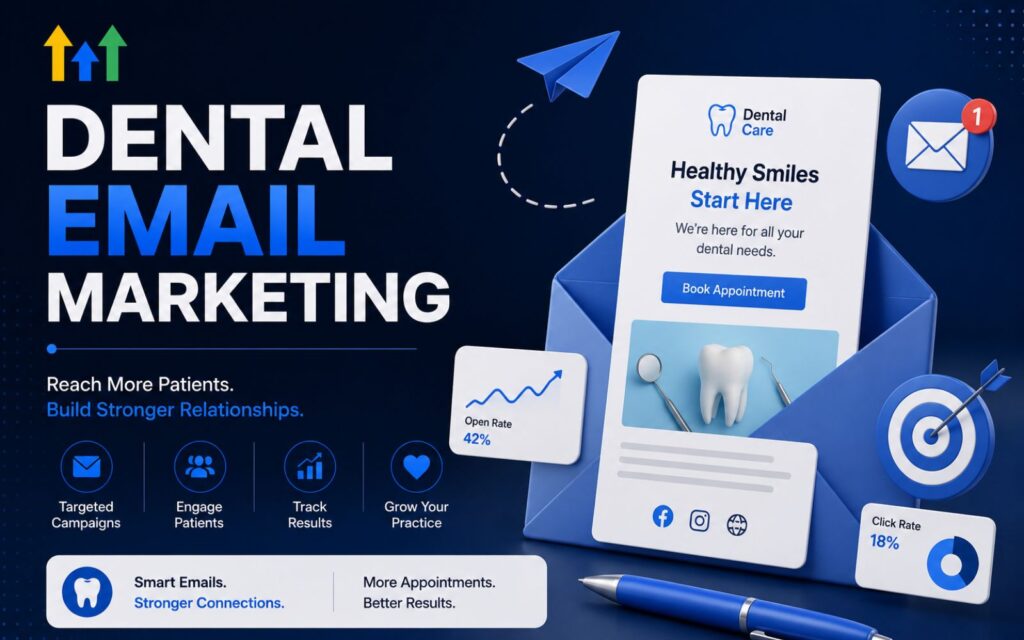
For many dental practice owners, the definition of “success” often revolves around clinical excellence. You invest in the latest 3D imaging, perfect your restorative techniques, and ensure your chairside manner is impeccable. Yet, despite providing world-class care, many clinics face a frustrating plateau.Using Email Newsletters for Dental Loyalty
The schedule has gaps. The phone rings, but no one answers because the front desk is processing a payment. Patients who were “excited” about a treatment plan simply vanish into the ether.
The hard truth of modern healthcare operations is this: Dental growth does not come from better dentistry alone — it comes from intelligent systems.
In this guide, we will explore why clinical skill is only half the battle and how structured communication—specifically through newsletters for dental loyalty and integrated CRM automation—creates a predictable, low-stress revenue engine.
What “Intelligence” Means in a Dental ClinicUsing Email Newsletters for Dental Loyalty
In a clinical setting, intelligence is diagnostic. In an operational setting, intelligence is systemic. An “intelligent” clinic is one where the success of the business is not dependent on the heroics of a single office manager or the memory of a receptionist.
Most clinics operate in a state of reactive chaos. A patient calls; you answer. A patient cancels; you try to fill the spot. An intelligent clinic operates with proactive visibility. You know exactly how many leads are in the pipeline, why patients are dropping off, and which automated “safety nets” are in place to catch revenue before it leaks.
Intelligence in this context is divided into two categories: Human and Systemic.
1. Human Intelligence: The Limits of the Front Desk
Your team is your greatest asset, but they are also human. They get tired, they get distracted, and they can only handle one task at a time. If your front desk is juggling a patient check-out, a phone call, and an insurance verification simultaneously, something will fail. Usually, it is the patient experience or the follow-up.
2. System Intelligence: The Automated Safety Net
System intelligence refers to the software and protocols that work while your team is busy. This includes:
- Automated Missed Call Text-Back: Instantly engaging a lead when the line is busy.
- Patient Lifecycle Messaging: Using newsletters for dental loyalty to stay top-of-mind without manual effort.
- No-Show Protections: Multi-channel reminders (SMS, Email, Voice) that require confirmation.
The Role of Newsletters for Dental Loyalty
Retention is significantly cheaper than acquisition. However, most dental marketing focuses on the “new patient” at the expense of the existing database. This is a strategic error.
Newsletters for dental loyalty are not about “selling” more fillings; they are about maintaining the relationship. An effective newsletter system provides:
- Educational Authority: Explaining the “why” behind preventive care.
- Recency Bias: Ensuring that when a patient finally feels that tooth sensitivity, your clinic is the first one they think of.
- Community Connection: Highlighting staff milestones or community involvement to humanize the practice.
When these newsletters are part of a larger CRM (Customer Relationship Management) system, they become data-driven. You aren’t just blasting emails; you are nurturing a community.
AI & Automation: Moving Beyond Manual Tracking
The modern dental office requires a “central nervous system” to manage the influx of data. This is where platforms like GoHighLevel have changed the landscape for small-to-mid-sized clinics.
Instead of having your patient data in one software, your leads in a spreadsheet, and your email marketing in another tool, an integrated system centralizes everything. This infrastructure allows a clinic owner to see the entire patient journey—from the first click on an ad to the five-year loyalty anniversary—in one dashboard.
Automation handles the “grunt work” that leads to staff burnout:
- Lead Tracking: Knowing exactly where every dollar of your marketing budget is going.
- Automated Follow-ups: Ensuring a patient who inquired about veneers receives a series of educational emails over 30 days, rather than a single, forgotten phone call.
- Revenue Stabilization: By automating the “boring” parts of the business, you ensure that the clinic earns money even when the front desk is short-staffed.
Operational Insight: Think of it this way — if your clinic loses even 5 missed calls per week, that’s silent revenue walking away. A structured automation system prevents that by instantly engaging those patients and bringing them back into your ecosystem.
[Start Building a Smarter Dental System](INSERT YOUR AFFILIATE LINK HERE) Note: The link above is an affiliate link. I only recommend systems that align with structured clinic growth.
Real Clinic Scenarios: Systems in Action
To understand the impact of these systems, let’s look at two common scenarios where clinics lose money and how an automated CRM fixes them.
Scenario A: The “Ghost” Treatment Plan
A patient is diagnosed with $3,000 worth of restorative work. They say, “I need to talk to my spouse,” and they leave. In a manual clinic, that patient is added to a “to-call” list that the receptionist might get to next Tuesday.
The Systemic Solution: The moment that treatment plan is marked as “pending” in the CRM, an automated sequence begins. The patient receives a testimonial video via text that evening, a PDF explaining the risks of delaying treatment two days later, and a personalized check-in from the coordinator on day four. The system does the “nurturing,” so the team only has to do the “closing.”
Scenario B: The 4:00 PM No-Show
A high-production appointment cancels at the last minute. The chair sits empty, but your overhead (staff, lights, rent) remains.
The Systemic Solution: An automated “Fill-in-the-Gap” blast is sent to all patients on a “Short-Call List” via SMS. The first one to reply “YES” is automatically booked into the slot. No manual phone tag required.
Operational Insight: Systems like these don’t just “save time”—they protect your profit margins from the volatility of human behavior. By implementing a centralized platform, you regain control over your schedule and your sanity.
[Start Building a Smarter Dental System](INSERT YOUR AFFILIATE LINK HERE)
Common Mistakes Clinic Owners Make with Technology
- Buying Tools, Not Solutions: Many owners buy five different “apps” that don’t talk to each other. This creates “data silos” and increases the technical debt of the staff.
- Over-complicating the Message: Your newsletters for dental loyalty should be simple. Use plain English, focus on benefits, and include a clear “Book Now” button.
- Ignoring the “Leaky Bucket”: Spending $5,000/month on Google Ads while your front desk has a 40% missed-call rate is like pouring water into a bucket with a hole in the bottom. Fix the system first; then scale the marketing.
The Future of Structured Clinics
The dental industry is moving toward consolidation. Private practices that want to remain competitive must operate with the same level of systematic efficiency as large DSOs (Dental Support Organizations) but with the personal touch of a local doctor.
The “Future-Proof” clinic uses data to predict patient needs. They use newsletters for dental loyalty to ensure their patient base doesn’t churn. They use AI to handle administrative tasks so their clinical team can focus on what they do best: dentistry.
Conclusion: From Burnout to Built-to-Last
If you feel like you are on a treadmill—working harder but seeing stagnant growth—the problem isn’t your clinical skill. The problem is your infrastructure.
By implementing structured systems, utilizing automated lead tracking, and maintaining consistent communication through newsletters for dental loyalty, you transition from a “job” to a “business.” You create a practice that can thrive whether you are at the chair or on vacation.
The transition to an automated clinic doesn’t happen overnight, but it starts with a single decision to prioritize systems over sweat.
Final Thought: True freedom for a dental owner is knowing that your patient acquisition and retention are handled by a machine that never calls in sick. It’s time to move from manual chaos to systematic growth.
[Start Building a Smarter Dental System](INSERT YOUR AFFILIATE LINK HERE)
FAQs
1. Will automation make my clinic feel “cold” or “robotic” to patients?
Quite the opposite. When automation handles the reminders and follow-ups, your staff has more time to be present and empathetic with the patient standing in front of them. It removes the stress that causes “robotic” interactions.
2. Do “newsletters for dental loyalty” actually get read?
Yes, if they provide value. If your newsletter is just a flyer for 10% off whitening, it will be ignored. If it contains oral health tips, staff updates, and helpful reminders, it builds trust and keeps your name in their inbox.
3. How much time does it take to set up a system like GoHighLevel?
Initial setup typically takes 2–4 weeks to customize to your workflow. However, once it is live, it saves the average front desk 10–15 hours per week in manual tasks.
4. What is “Missed Call Text-Back” and why is it important?
When someone calls your office and you don’t answer, they usually call the next dentist on Google. Missed Call Text-Back automatically sends them a text: “Sorry we missed you! How can we help?” This keeps the lead engaged and stops them from calling your competitor.
5. Can I integrate my existing practice management software (PMS) with a CRM?
Most modern CRMs can work alongside your PMS. The CRM handles the “marketing and communication” front-end, while the PMS handles the “clinical and billing” back-end.
6. Is it expensive to maintain these systems?
Compared to the cost of one lost “Big Case” or 10 no-shows, the cost of an automated system is negligible. Most clinics see a return on investment within the first 30 days of implementation simply by recovering lost leads.