
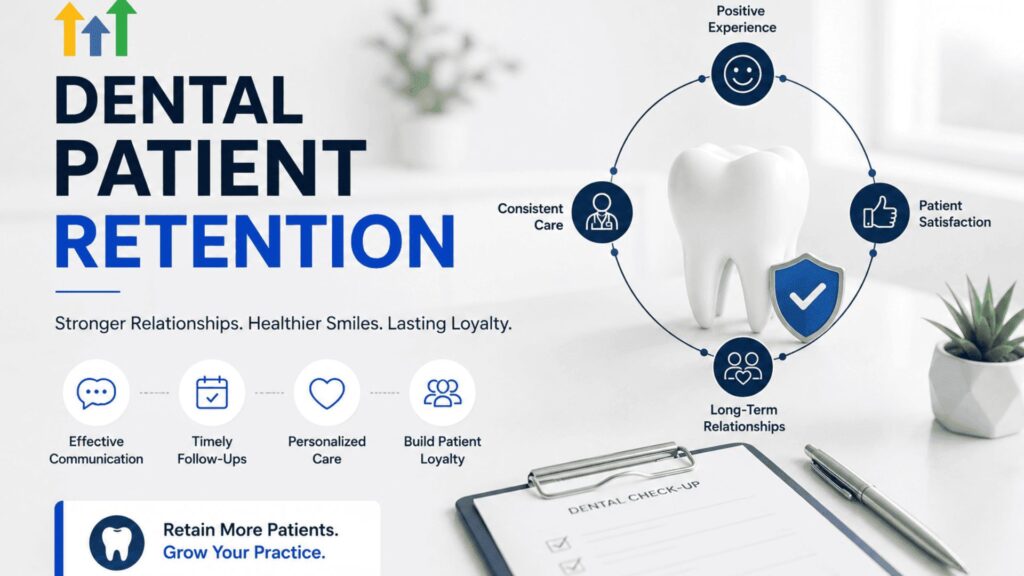
In the world of clinical dentistry, we are trained to focus on the margins of a crown, the depth of a pocket, and the precision of an implant placement. We assume that if the dentistry is excellent, the business will thrive.
However, any seasoned practice owner knows that clinical excellence is merely the baseline. The real “leak” in a dental practice isn’t usually in the quality of the composites; it’s in the operations. Many practices operate like a bucket with holes in the bottom: they spend thousands on marketing to attract new patients, only to lose them through missed calls, fragmented follow-ups, and a lack of structured dental patient retention strategies.
The reality of 2026 is that patients expect a seamless digital experience. If your front desk is too busy to answer a call or too overwhelmed to follow up on a treatment plan, the patient moves on to the clinic next door. Growth does not come from working harder; it comes from building intelligent systems.
1. The Operational Pain Points of the Modern Practice
Most dental clinics suffer from three primary “silent killers” of revenue:
- Missed Call Leakage: A potential $3,000 Invisalign case calls while your receptionist is processing a payment. The call goes to voicemail. Research shows that 60% of dental leads will not leave a message; they simply call the next listing on Google.
- The “No-Show” Tax: An empty chair is the most expensive item in your office. When a patient forgets an appointment, you lose the production value and still pay the overhead for your staff and utilities.
- Treatment Plan Limbo: Thousands of dollars in diagnosed treatment sit in your charts, unaccepted and un-followed. Without a system to nurture these leads, that revenue effectively evaporates.
When these issues persist, the solution is often “more marketing.” But more leads into a broken system only leads to more stress and higher overhead. True stability requires a shift from manual labor to system intelligence.
2. What “Intelligence” Means in a Dental Clinic
In a dental context, “intelligence” isn’t about how high the dentist’s IQ is. It is about how well the clinic’s data flows. An intelligent clinic knows exactly how many people called yesterday, how many were booked, and exactly why the others weren’t.
Intelligence is the transition from reactive management (responding to crises as they happen) to proactive systems (preventing crises through automation).
Human Intelligence vs. System Intelligence
Human Intelligence is your team’s ability to provide empathy, explain complex procedures, and build rapport. This is irreplaceable. However, humans are notoriously bad at repetitive, high-volume tasks like:
- Sending manual SMS reminders at exactly 24 hours pre-appointment.
- Checking the call log every 10 minutes for missed opportunities.
- Following up with 50 inactive patients who haven’t had a cleaning in 9 months.
System Intelligence handles the “boring” but vital tasks. It acts as a 24/7 digital employee that never sleeps, never gets sick, and never forgets to follow up. By offloading these tasks to a CRM (Customer Relationship Management) platform, you free your human staff to do what they do best: care for patients.
3. AI and Automation: The New Infrastructure
The word “automation” often scares clinic owners who fear losing the “personal touch.” In reality, automation protects the personal touch. When your front desk isn’t bogged down by 40 confirmation calls a day, they have the time to actually greet the patient in the chair with a smile and a focused conversation.
Modern infrastructure for dental patient retention involves centralizing communication. Platforms like GoHighLevel allow clinics to centralize patient communication, reminders, and tracking inside one structured system. Instead of having your reputation management in one software, your SMS reminders in another, and your lead tracking in a spreadsheet, everything lives in a single source of truth.
Key Pillars of an Automated Dental System:
- Missed Call Text-Back: If a call is missed, the system immediately sends a text: “Sorry we missed you! We’re busy helping a patient right now. How can we help you?” This saves the lead instantly.
- Automated Nurture Sequences: For high-value treatments like implants or clear aligners, the system sends educational content over 30 days to help the patient make an informed decision.
- The Re-activation Engine: Automatically scanning your database for patients who haven’t visited in over 6 months and sending them a personalized invitation to return.
Transitioning from a chaotic manual workflow to a structured digital environment isn’t just about efficiency—it’s about clinical peace of mind. When your systems handle the follow-ups, you can focus entirely on the patient in your chair.
[Start Building a Smarter Dental System](INSERT YOUR AFFILIATE LINK HERE)
Note: The link above is an affiliate link. I only recommend systems that align with structured clinic growth.
4. Real-World Clinic Scenarios: Systems in Action
Let’s look at two different practices to see how dental patient retention and revenue are affected by system intelligence.
Clinic A: The Manual Model
Clinic A relies on a high-performing office manager named Sarah. Sarah is excellent, but she is human. On a Tuesday morning, the phones are ringing, a patient is complaining about their insurance coverage, and the hygienist is running late.
- Two calls go to voicemail.
- Three “no-show” patients aren’t called until late afternoon.
- The “Unscheduled Treatment” report hasn’t been touched in three weeks. Clinic A is “busy,” but their growth is plateaued because they are at the limit of human capacity.
Clinic B: The Systemized Model
Clinic B uses an integrated CRM like GoHighLevel.
- When a call is missed, the patient receives an instant text and a link to book online.
- At 10:00 AM, the system automatically detects a no-show and sends a “We missed you” text with a rebooking link.
- A patient who was diagnosed with a crown two weeks ago receives a gentle, automated email explaining the risks of delaying treatment. The staff in Clinic B is calm. They spend their time on high-value interactions because the “grunt work” is handled by the software.
5. Common Mistakes in Dental Patient Retention
Many owners attempt to fix retention with the wrong tools. Here are the most frequent errors:
- Over-Reliance on Direct Mail: While physical mail has its place, it’s expensive and untrackable. Digital systems allow you to see exactly who clicked a link and when.
- Treating All Patients the Same: A patient who needs a $40,000 “All-on-4” case requires a different communication cadence than a 6-month prophy patient. Systems allow for “segmentation”—sending the right message to the right person.
- Ignoring the “Leaky Bucket”: Spending $5,000/month on Google Ads while your front desk has a 30% call-to-appointment conversion rate is a waste of capital. Fix the system first, then scale the marketing.
Think of it this way—if your clinic loses even 5 missed calls per week, that’s silent revenue walking away. A structured automation system prevents that leak from becoming a flood, ensuring your marketing dollars actually result in chairs filled.
[Start Building a Smarter Dental System](INSERT YOUR AFFILIATE LINK HERE)
6. Revenue Stabilization Without Burnout
The primary cause of dentist burnout isn’t the dentistry; it’s the volatility of the schedule. One week you are overbooked and stressed; the next week is a “Swiss cheese” schedule full of holes.
Dental patient retention systems stabilize this. By creating a predictable “recall” loop and automated follow-ups for pending treatment, you create a floor for your monthly revenue. You no longer have to wonder where next month’s patients are coming from because the system is constantly working to pull them back into the practice.
Furthermore, a systemized practice is a more valuable asset. If you ever decide to sell your clinic, a buyer will pay a premium for a “turnkey” operation with documented systems and automated patient flows, rather than a practice that relies solely on the owner’s personality or a single “super-star” employee.
7. The Future of the Structured Clinic
As we look toward the end of the decade, the gap between “high-tech/high-system” clinics and “traditional/manual” clinics will widen. Patients now expect to book appointments via text, receive reminders on their watches, and pay their balances via a secure link.
Implementing a system like GoHighLevel isn’t just about staying current—it’s about future-proofing. It allows you to collect data on patient behavior, automate your reputation management (reviews), and manage your entire marketing funnel from one dashboard.
The goal is a “Quiet Practice.” A practice where the phone rings less because patients are booking online. A practice where the waiting room is rarely crowded because the schedule is optimized. A practice where the owner can take a week off without the revenue dropping to zero.
Building this requires a shift in mindset. You must stop seeing yourself as just a clinician and start seeing yourself as an architect of a dental delivery system.
Before moving to the implementation phase, consider your current overhead. If you could reduce no-shows by just 10% and recover two missed calls a week, the system pays for itself ten times over in the first month.
[Start Building a Smarter Dental System](INSERT YOUR AFFILIATE LINK HERE)
Dental Patient Retention (Part 2): From Clinical Operations to Brand Excellence
In the first part of our series, we explored why structured systems are the antidote to clinic burnout. However, for a Senior Healthcare Strategist, the conversation doesn’t end with efficiency. To truly master dental patient retention, we must look at the “Invisible Metrics”—the psychological and data-driven layers that transform a standard clinic into a high-growth dental brand.
Growth is often mistaken for a high volume of new patients. In reality, sustainable growth is the result of increasing the Lifetime Value (LTV) of every patient who walks through your door.
1. The Psychology of “The Experience Gap”
Most clinic owners assume a patient didn’t return because of price. However, industry data suggests that nearly 70% of patient attrition is due to “perceived indifference.” Patients leave because they feel like just another number in your high-turnover day.
Bridging this gap requires systems that simulate high-level human empathy:
- The Post-Op Touchpoint: Does your system automatically send a personalized recovery check-in 24 hours after a surgical procedure?
- Frictionless Re-entry: Is re-scheduling an appointment a 5-minute phone call, or a 5-second SMS interaction?
When you design your systems around Cognitive Ease, you remove the mental barriers that prevent a patient from returning. Retention becomes a byproduct of your infrastructure, not a lucky accident.
2. Uncovering “Silent Attrition” Through Data
“Silent Attrition” is the slow leak that kills a practice. These are patients who aren’t necessarily unhappy; they are simply “distracted.” Without a CRM, these patients vanish into your archive folders.
Intelligent systems like GoHighLevel allow you to track metrics that your standard dental software often obscures:
- Churn Rate: Exactly what percentage of your hygiene patients failed to pre-appoint this month?
- Treatment Velocity: How long does it take, on average, for a patient to move from “Diagnosis” to “Chair Time”?
- Segmented Retention: Are your high-value cosmetic patients returning at the same rate as your general check-up patients?
Data-driven retention means you stop guessing. You move from “I think we’re busy” to “I know our retention rate is 85%.”
3. Beyond Simple Reminders: Behavioral Triggers
Traditional dental patient retention relies on a “one-size-fits-all” reminder. Modern intelligence uses behavioral triggers to send the right message at the right time.
- The Educational Drip: If a patient expresses interest in dental implants but doesn’t book, the system doesn’t just “remind” them. It sends a sequence of educational videos explaining the long-term bone-loss risks of missing teeth.
- The Milestone Loop: Instead of a generic birthday card, send an automated “Smile Anniversary” message with a low-cost, high-perceived-value offer, like a professional cleaning upgrade.
- Smart Feedback Gating: Automation can identify your most satisfied patients and prompt them for a Google Review instantly, while routing any neutral feedback directly to your private dashboard for immediate resolution.
Automation shouldn’t replace the human touch; it should scale it. By offloading these repetitive “nudges” to a platform, your front desk can focus on the patient currently standing in front of them.
[Start Building a Smarter Dental System](INSERT YOUR AFFILIATE LINK HERE)
Note: The link above is an affiliate link. I only recommend systems that align with structured clinic growth.
4. Solving Front-Desk Fatigue
Your front-desk team is the face of your clinic. If they are buried under insurance verifications and manual follow-up calls, their ability to provide a “premium” experience drops.
Structured systems can reduce administrative workloads by up to 40%. When the “grunt work”—such as booking confirmations, missed call recovery, and payment reminders—is handled by a CRM, your staff is free to act as “Patient Coordinators” rather than “Clerical Workers.”
Think of it this way: a tired, overwhelmed receptionist is the greatest threat to your retention rate. An automated system provides them with the breathing room to be excellent at their jobs.
5. Case Study: The “Comparison” Barrier
In the age of digital transparency, patients often seek a second opinion based on price.
- The Manual Clinic: The patient leaves with a paper quote. The clinic never hears from them again.
- The Intelligent Clinic: Within 10 minutes of leaving, the patient receives a digital copy of their treatment plan via text, followed by a series of “Why Choose Us” case studies over the next three days.
This level of professional persistence creates a “Brand Authority” that makes it very difficult for the patient to choose a cheaper, less-organized competitor.
6. Common Strategic Mistakes in Retention
- Neglecting the “Dormant” Database: It costs five times more to acquire a new patient than to reactivate an old one. If your database hasn’t been “re-activated” in the last 90 days, you are leaving six figures of revenue on the table.
- Generic Mass Messaging: Patients ignore “blasts.” They respond to “messages.” Use a system that allows you to tag patients (e.g., “Parent,” “Orthodontic,” “Emergency”) so your communication feels personal.
- Lacking a Feedback Loop: If you don’t know why patients aren’t returning, you can’t fix the hole in the bucket. Automated exit surveys provide the raw data needed for operational pivots.
A clinic’s success is no longer determined solely by the dentist’s hands. It is determined by the digital ecosystem that manages the patient journey after the procedure is finished.
[Start Building a Smarter Dental System](INSERT YOUR AFFILIATE LINK HERE)
7. The Roadmap to a “Quiet” Practice
To implement a system that truly drives dental patient retention, follow these three strategic steps:
- The Leak Audit: Calculate exactly how many diagnosed treatments went un-followed in the last quarter.
- Centralize Communication: Move all your SMS, Email, and WhatsApp interactions into one unified inbox so no message is ever missed.
- Deploy Reactivation: Launch a “Reactivation Campaign” to your existing database. This is usually the fastest way to see an immediate ROI on your CRM investment
8. Conclusion
Dental patient retention is the heartbeat of a profitable practice. While new patients are the lifeblood of growth, your existing patient base is the foundation of your stability. Relying on manual processes to maintain this foundation is a recipe for inconsistency and burnout.
By integrating intelligent automation and a robust CRM, you bridge the gap between clinical excellence and operational efficiency. You move from a state of “ordered chaos” to a state of “structured growth.” The tools exist to make your practice run smoother, your staff happier, and your revenue more predictable. The only question is whether you will continue to work for your practice, or build a system that works for you.
FAQs About Dental Patient Retention & Systems
Q1: Will automation make my practice feel “robotic” or impersonal? Actually, the opposite occurs. By automating the “administrative noise” (confirmations, basic FAQs, reminders), your team has more mental bandwidth to provide genuine, personalized care to the patients physically present in the office.
Q2: How hard is it to switch from my current practice management software? You don’t necessarily have to “switch” your clinical software (like Dentrix or Open Dental). Systems like GoHighLevel often sit on top of or alongside your clinical records to handle the marketing, communication, and lead-tracking side of the business.
Q3: Is GoHighLevel difficult for a non-tech-savvy dental team to use? The beauty of a structured CRM is that once the “workflows” are built, they run in the background. Your team primarily interacts with a simplified “Conversations” inbox where all texts, emails, and calls are centralized.
Q4: What is the most effective way to reduce no-shows immediately? A multi-channel reminder approach. Don’t just rely on one email. A sequence involving a text 24 hours before, and a “Day-of” reminder 2 hours before, has been shown to reduce no-shows by up to 40%.
Q5: How does a CRM help with Google Reviews? Most systems can be set to automatically send a “Review Request” via text the moment a patient is checked out in your system. This captures the patient’s positive sentiment while they are still in the parking lot.
Q6: What is “Missed Call Text-Back” and why is it important? It is an automated feature that detects when a call isn’t answered and immediately texts the caller back. In a world where people hate leaving voicemails, this keeps the “conversation” alive and prevents them from calling your competitor.